Natural solutions for canine osteoarthritis
Discover natural and physiotherapeutic solutions for relieving canine osteoarthritis and preserving your dog's everyday mobility, supported by veterinary literature.
Pauline Durepaire
Published in
Practical TipsCanine osteoarthritis is a chronic, painful and progressive condition that gradually impairs a dog's mobility and quality of life.
While medication can relieve pain in the short term, it is not always sufficient to preserve joint flexibility in the long run, particularly in older or less active dogs.
This is why many veterinary teams are now turning to natural and physiotherapeutic solutions, based on complementary approaches: hydrotherapy, laser therapy, electrical stimulation, massage, osteopathy and ultrasound.
When supervised by a professional, these methods help maintain mobility, reduce inflammation and improve daily comfort for dogs with osteoarthritis.
But which techniques are truly effective? This guide reviews the non-drug solutions best supported by evidence, drawing on the latest scientific publications.
Why a multimodal approach?
The chronic joint pain caused by osteoarthritis can trigger a vicious cycle: less movement → more stiffness → muscle loss → more pain. The multimodal approach aims to break this spiral by combining multiple therapeutic strategies:
- Weight management
- Adapted physical activity
- Nutritional supplements
- Functional rehabilitation
- Physical and neurosensory techniques
This combination does not cure osteoarthritis, but it can help slow its progression and improve the dog's quality of life.
Hydrotherapy: reducing joint load while maintaining effort
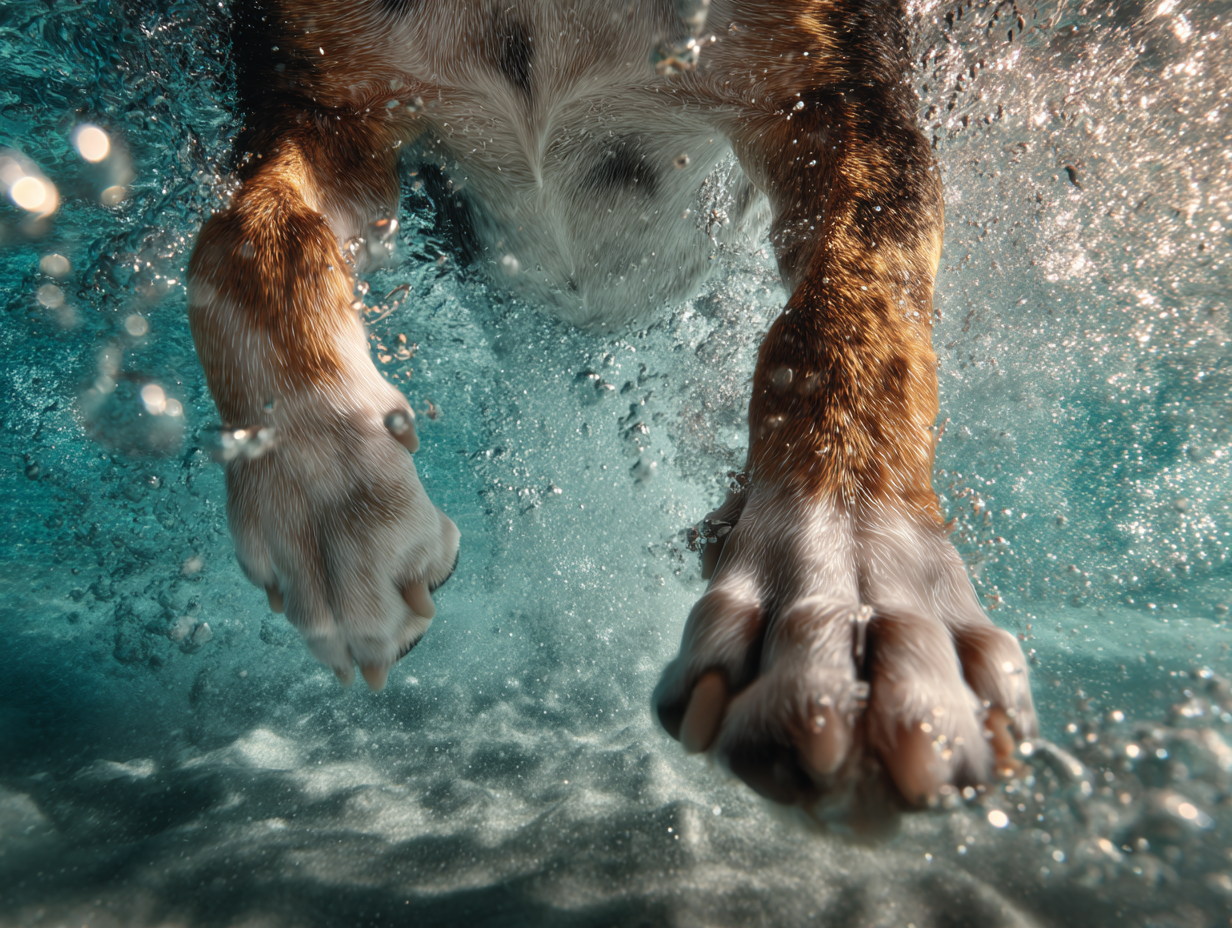
Hydrotherapy and underwater treadmill walking are among the most widely used techniques in veterinary rehabilitation.
They help to:
- Reduce the load on the joints by up to 60%
- Improve joint flexibility without pain
- Preserve and strengthen muscle mass
- Train movement patterns safely
A study conducted at the University of Tennessee (Lee, 2000) on two dogs with osteoarthritis showed a marked improvement in mobility, posture and the ability to play, confirmed by objective locomotion measurements.
Hydrotherapy allows exercise in a reduced-load environment, improving aerobic capacity, muscle strength and range of motion, while reducing impact on the joints.
Cartlidge's review (2015) explains why hydrotherapy is beneficial for dogs with osteoarthritis: buoyancy reduces the load on painful joints, water resistance allows controlled muscle work, proprioceptive stimulation supports movement patterns, and warmth provides a pain-relieving effect. Together, these factors help improve or maintain aerobic capacity, muscle strength and range of motion, while limiting impact on painful areas.
Therapeutic laser: modulating inflammation without pain
Photobiomodulation, or therapeutic laser therapy, involves applying low-intensity infrared light to soft tissues. It works through several mechanisms:
- Reduction in the production of inflammatory cytokines (IL-1β, IL-6, TNF-α)
- Improvement of local microcirculation
- Stimulation of tissue regeneration
- Relief of chronic pain
In his literature review, Hochman (2018) demonstrates that photobiomodulation influences both the immune response and healing of various types of tissues, supporting its supervised clinical use in dogs.
Recent studies show that laser therapy modifies the inflammatory and immune response, while promoting the healing of various types of tissues.
TENS: blocking pain through electrical stimulation
TENS (Transcutaneous Electrical Nerve Stimulation) is a non-invasive technique that involves applying gentle electrical impulses to the surface of the skin.
These impulses activate sensory nerve fibres, which can temporarily inhibit the transmission of pain signals to the spinal cord and brain. This principle is based on the "gate control" theory: electrical stimulation of tactile fibres occupies the nerve pathways and blocks pain messages, providing a transient pain-relieving effect.
A recent study by Pedersen et al. (2024) evaluated this approach in fifteen dogs with osteoarthritis using a randomised, placebo-controlled protocol. The dogs received TENS sessions (80 Hz, 100 µs, 45 minutes) over one to two weeks, and their gait parameters were measured on a sensor mat. The results showed no significant difference between the TENS group and the placebo group on locomotor variables (vertical force, impulse, step symmetry). These findings suggest that, under this protocol, TENS did not modify gait or weight distribution.
However, as the authors point out, the small sample size, the diversity of affected joints and the lack of consistency in settings across the literature make further studies necessary before drawing conclusions on its clinical efficacy.
Localised vibration therapy: awakening proprioception and motor function
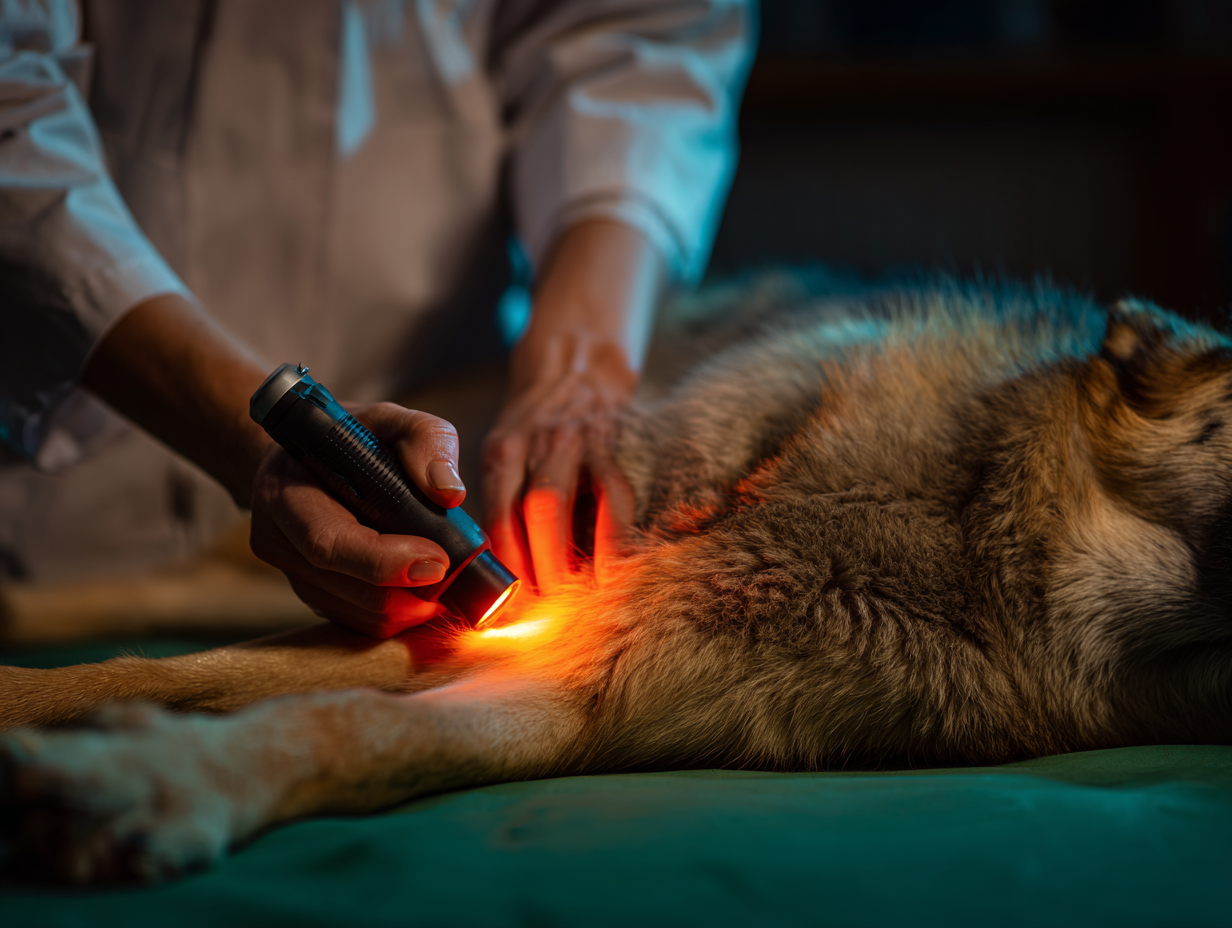
Localised vibration therapy (Localized Vibration Therapy, LVT) is an emerging veterinary physiotherapy technique that involves applying targeted mechanical micro-vibrations to muscles or tendons.
These vibrations, calibrated to specific frequencies (generally between 50 and 150 Hz), activate neuromuscular and proprioceptive receptors responsible for the perception of movement and reflex muscle contraction.
According to several recent studies:
- A study published in Frontiers in Veterinary Science (2024) showed that localised vibration therapy improves proprioception and postural stability in dogs undergoing locomotor rehabilitation, particularly following immobilisation.
- Furthermore, vibrations applied to the tendons trigger a natural reflex response in the muscles, similar to that produced by real movement. This helps maintain muscle strength and coordination.
There are significant reductions in the mean pain severity score after 7 and 14 days of localised vibration therapy compared to baseline values.
This approach is particularly relevant for managing chronic locomotor disorders (such as osteoarthritis) or during the post-operative phase, when the dog is not yet able to engage in active exercise.
When applied by a rehabilitation vet, localised vibration can be incorporated into a comprehensive physiotherapy protocol, alongside hydrotherapy, therapeutic laser or TENS.
Massage: relieving tension, promoting drainage and restoring comfort
Massage is one of the simplest and most effective tools for improving a dog's mobility and physical wellbeing.
By stimulating the skin, muscles and circulation, it helps to:
- Reduce tension and muscle spasms caused by pain
- Promote blood flow and lymphatic drainage
- Improve oxygenation and the removal of metabolic waste
- Provide a relaxing and stress-relieving effect that benefits joint comfort
According to veterinary physiotherapists, gentle and regular massage helps prepare the tissues before exercise and aids recovery afterwards.
It is particularly beneficial for dogs with osteoarthritis whose muscle stiffness worsens joint discomfort.
However, these techniques must be performed with care: a trained professional will know how to adjust the pressure and contact areas according to the animal's joint and muscle condition.
Veterinary osteopathy: rebalancing overall mobility
Veterinary osteopathy is based on the palpation and gentle manipulation of tissues to restore natural physiological micro-movements of the body.
In dogs with osteoarthritis, this approach aims to:
- Release compensatory tension caused by a painful posture
- Improve the circulation of blood, lymph and synovial fluid
- Restore overall joint mobility
- Reduce muscular imbalances and areas of restriction
The available evidence on the clinical efficacy of osteopathy and other manual techniques in dogs with osteoarthritis remains limited, with most studies having small sample sizes and no control group.
However, field reports suggest an improvement in comfort and mobility, particularly when these manipulations are combined with broader physiotherapy measures (exercise, weight management, hydrotherapy, laser therapy).
Physiotherapeutic approaches in dogs with osteoarthritis primarily aim to reduce pain and preserve joint function. Their effectiveness relies on the thoughtful integration of several complementary techniques.
It is, however, essential that these manipulations be carried out exclusively by a veterinary osteopath or a duly certified practitioner, as certain manoeuvres may be contraindicated in older dogs or those experiencing an acute inflammatory episode.
Discover our osteopathy case study
Therapeutic ultrasound: a supplementary technique still under evaluation
Therapeutic ultrasound is used in veterinary physiotherapy to treat muscular, tendon and joint conditions in dogs.
It involves the emission of high-frequency sound waves, converted into heat within deep tissues. This warming aims to improve tissue flexibility, stimulate circulation and relieve chronic pain.
According to the systematic review by Boström et al. (2022), results are inconsistent for musculoskeletal disorders (osteoarthritis, back pain, hindlimb weakness): some isolated benefits have been observed, but no independent confirmation has been published. However, the authors conclude there is moderate scientific evidence for a positive effect of ultrasound on bone healing following experimental fracture in dogs.
Ultrasound also causes a measurable increase in tissue temperature (up to +5 °C in healthy muscles and tendons), which may account for some pain-relieving or relaxation effects, though the precise mechanism has not yet been established.
Finally, the authors note that the methodological quality of studies must be improved before recommending the routine use of this technique, and that its use must always be supervised by a trained veterinarian.
Towards a comprehensive and personalised programme
Hydrotherapy, laser therapy, electrical stimulation, massage and osteopathy should be integrated into a coherent and individualised strategy, defined by a vet or an animal physiotherapist.
The goal is to combine the right approaches according to the dog's age, pain level and physical condition.
A comprehensive programme rests on four pillars:
- Adapted exercise: gentle walks, swimming, exercise on soft surfaces, with intensity progressively adjusted.
- Weight management: excess weight can increase the strain on painful joints.
- Adapted environment: non-slip mats, firm bedding, access ramps, raised food and water bowls.
- Targeted nutritional support, particularly with omega-3 EPA/DHA, to help limit inflammation and maintain joint flexibility.
By combining these measures, the dog regains greater mobility, comfort and confidence in its movements, while also strengthening the bond with its owner.
FAQ
Conclusion
Canine osteoarthritis requires comprehensive management that goes beyond simple treatment.
Physiotherapy, combined with an appropriate lifestyle (weight management, physical activity and environment) and targeted nutritional support, is one of the main approaches to preserving mobility and comfort in dogs with osteoarthritis.
Techniques such as hydrotherapy, laser therapy and vibration therapy offer tangible benefits, while massage and osteopathic manipulations help restore musculoskeletal balance.
Each has its place, provided it is used within a considered, supervised and personalised approach.
As a complement to these treatments, daily high-quality omega-3 supplementation, such as that provided by PERNIXOL®, can help limit joint inflammation, support muscle recovery and extend the benefits of physiotherapy over time.
A dog that moves more comfortably can enjoy a better quality of life.
Discover PERNIXOL®
Scientific references
- Lee, William Robert, The Effects of an Underwater Treadmill Physical Therapy Program on Two Dogs with Osteoarthritis. University of Tennessee - Knoxville. 2000. Chancellor's Honors Program Projects. https://trace.tennessee.edu/utk_chanhonoproj/402
- Helen Cartlidge. Hydrotherapy for the osteoarthritic dog: why might it help and is there any evidence? December 2015. The Veterinary Nurse 6(10):600-606 . DOI:10.12968/vetn.2015.6.10.600
- Godfrey D.R. (2023). Underwater treadmill therapy in veterinary practice: benefits and considerations. DVM360.
- Hochman L. Photobiomodulation Therapy in Veterinary Medicine: A Review. Top Companion Anim Med. 2018 Sep;33(3):83-88. doi: 10.1053/j.tcam.2018.06.004. Epub 2018 Jul 5. PMID: 30243364.
- Pedersen A, Hyytiäinen HK, Rhodin M, Forterre F, Penell J, Bergh A. Effect of Transcutaneous Electrical Nerve Stimulation on Gait Parameters in Dogs with Osteoarthritis. Animals (Basel). 2024 May 30;14(11):1626. doi: 10.3390/ani14111626. PMID: 38891673; PMCID: PMC11171175.
- Gouveia D, Cardoso A, Carvalho C, Almeida A, Gamboa Ó, Ferreira A, Martins Â. Approach to Small Animal Neurorehabilitation by Locomotor Training: An Update. Animals (Basel). 2022 Dec 18;12(24):3582. doi: 10.3390/ani12243582. PMID: 36552502; PMCID: PMC9774773.
- Turner KF, Canapp SO Jr, Canapp DA, Sutton AM, Canapp A, Jimenez IA, Gerardi J. Client-based evaluation of the effects of localized vibration therapy on pain and mobility scores in dogs with radiographic bilateral hip dysplasia. Front Vet Sci. 2024 Aug 21;11:1424373. doi: 10.3389/fvets.2024.1424373.
- Gomes MVF, Rahal SC, Santos IFCD, Dadalto CR, Mamprim MJ, Negrão RR, Hormaza JM, Tsunemi MH, Gómez Álvarez CB. Long-Term Effects of Whole-Body Vibration on Hind Limb Muscles, Gait and Pain in Lame Dogs with Borderline-to-Severe Hip Dysplasia-A Pilot Study. Animals (Basel). 2023 Nov 9;13(22):3456. doi: 10.3390/ani13223456.
- Boström A, Asplund K, Bergh A, Hyytiäinen H. Systematic Review of Complementary and Alternative Veterinary Medicine in Sport and Companion Animals: Therapeutic Ultrasound. Animals (Basel). 2022 Nov 14;12(22):3144. doi: 10.3390/ani12223144.
- Mille MA, McClement J, Lauer S. Physiotherapeutic Strategies and Their Current Evidence for Canine Osteoarthritis. Vet Sci. 2022 Dec 21;10(1):2. doi: 10.3390/vetsci10010002.
This article was written by the R&D team at Laboratoire Sensilia, experts in animal nutrition.



