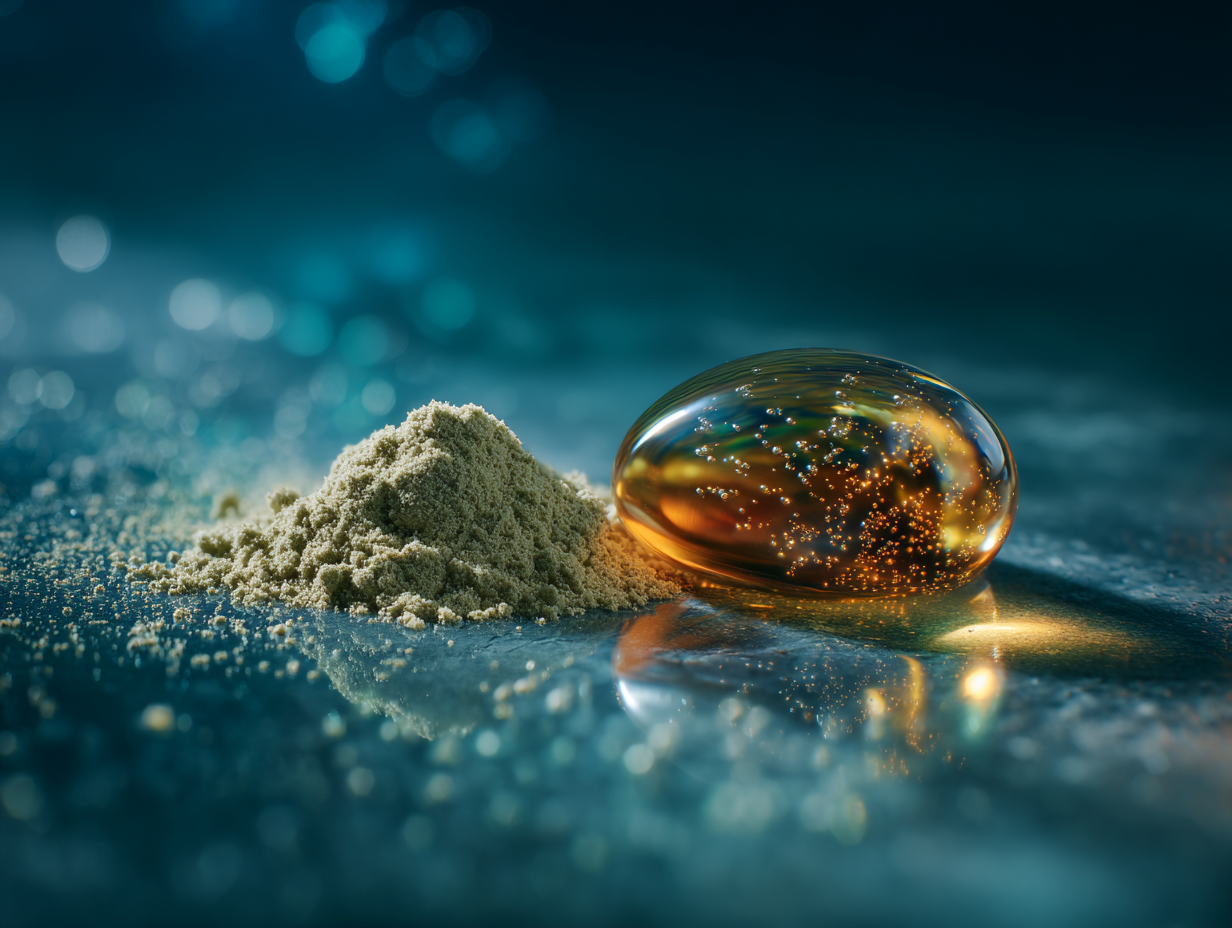
Green Lipped Mussel Oil vs Powder: What to Choose for Canine Osteoarthritis?
Green-lipped mussel oil or powder? Discover their differences and why oil, with its higher omega-3 concentration, is the most effective form for supporting your dog's mobility.
Pauline Durepaire
Published in
Buying GuidesThe green-lipped mussel (Perna canaliculus) is a mussel species native to the coasts of New Zealand. For many years, it has been used to treat joint disorders, particularly osteoarthritis in dogs. Its natural anti-inflammatory properties and its role in protecting cartilage and bone, primarily linked to its high omega-3 content, make it a valued dietary supplement for supporting joint comfort and improving mobility in older people and animals.
The green lipped mussel extraction process
Green-lipped mussel can be processed into several forms for use in dietary supplements for canine osteoarthritis:
- Green-lipped mussel powder
- Green-lipped mussel oil extracted with supercritical CO₂
- Green-lipped mussel oil extracted with ethanol
Although these forms come from the same type of green-lipped mussel, their extraction processes differ:
Green lipped mussel powder extraction
To create the powder, the flesh of the green-lipped mussel is subjected to a drying process, often by freeze-drying. This process preserves certain nutrients while eliminating moisture from the flesh. Once dried, the mussel flesh is ground into a fine powder.
This process leads to a loss of certain compounds sensitive to heat and oxygen, such as omega-3 fatty acids.
Additives may be added to stabilise the powder and improve its shelf life.
Some manufacturers use natural or synthetic preservatives to prevent microbial growth in the powder. These preservatives may include substances such as citric acid, potassium sorbate, sodium citrate, or calcium silicate.
Supercritical CO₂ extraction of green lipped mussel oil
Before extraction, the mussel flesh is often frozen at very low temperatures to preserve the quality of active compounds, particularly Omega-3 fatty acids, which are sensitive to heat. This step also helps prevent any enzymatic degradation of nutrients.
The frozen mussel flesh is then placed in a high-pressure extractor where it is subjected to supercritical CO₂. This dissolves the lipids present in the mussel, particularly omega-3 fatty acids.
The main advantage of supercritical CO₂ extraction is that it is carried out at relatively low temperatures, which protects heat-sensitive compounds such as omega-3 fatty acids from degradation, producing a higher-quality oil. Furthermore, no chemical solvent is used, making the extracted oil purer and free from potentially toxic residues.
After extraction, the lipid-rich supercritical CO₂ is directed to a separation chamber where the pressure is lowered, allowing the CO₂ to return to its normal gaseous state. During this process, the extracted lipids settle, forming a pure, Omega-3-rich oil.
The resulting oil is then filtered to remove any remaining impurities. Natural antioxidants, such as vitamin E, are often added to stabilise the omega-3 fatty acids and prevent their oxidation, ensuring a longer shelf life.
Ethanol extraction of green lipped mussel oil
Ethanol extraction is a commonly used method for obtaining green-lipped mussel oil. It relies on food-grade ethanol, a solvent capable of dissolving the fats and lipid compounds present in the flesh. After grinding, the mussels are mixed with ethanol under agitation to extract omega-3 fatty acids (EPA, DHA and ETA), as well as phospholipids, molecules that play a key role in cell membrane structure and help improve the absorption of omega-3 fatty acids by the body.
Discover our article on phospholipids
Once extraction is complete, the mixture is filtered and the ethanol is evaporated under vacuum at low temperature, leaving a lipid concentrate. However, unlike supercritical CO₂ extraction, this technique involves direct contact with a liquid solvent and slightly higher temperatures, which can increase the risk of Omega-3 oxidation if the process is not perfectly controlled. Furthermore, slight traces of solvent may remain if evaporation is not complete, making the oil somewhat less pure than that obtained by CO₂.
Oil obtained through ethanol extraction remains nutritionally valuable, as it retains a significant proportion of phospholipids and essential fatty acids. It simply has a stronger marine odour and slightly lower stability, which explains why manufacturers often add natural antioxidants, such as vitamin E, to extend its shelf life.
Green lipped mussel oil: 4 major benefits
While many joint comfort supplements use green-lipped mussel powder because of its low cost, green-lipped mussel oil offers advantages in terms of efficacy and tolerance in dogs:
4 benefits of green lipped mussel oil
- 15x more concentrated in Omega-3
- Better digestive tolerance
- 6x faster absorption
- Easy to give
1. Higher Omega-3 concentration
One of the most notable advantages of green-lipped mussel oil lies in its omega-3 content, as these essential fatty acids have powerful anti-inflammatory properties. The oil contains up to 15 times more Omega-3 than green-lipped mussel powder. This is because a large proportion of essential fatty acids is lost during the powder manufacturing process. Yet omega-3 fatty acids are the main active ingredients with clinically demonstrated efficacy in dogs suffering from osteoarthritis.
2. Better digestive tolerance
Green-lipped mussel powder contains proteins that can sometimes be poorly digested by certain dogs, particularly those predisposed to digestive disorders or allergies. Some breeds, such as French Bulldogs, Boxers and Boston Terriers, are more prone to these intolerances. Potential allergens in green-lipped mussel include specific marine proteins and traces of crustaceans, which can trigger reactions in sensitive dogs.
Unlike powder, green-lipped mussel oil contains no proteins, making it a suitable choice for dogs with digestive sensitivities or allergies. By eliminating allergenic proteins, the oil is easier to digest and reduces the risk of adverse reactions.
3. Faster absorption
Green-lipped mussel oil stands out for its ability to act quickly after ingestion. In pharmacology, the time taken for active ingredients to reach their maximum concentration in the blood is measured. This is called the "plasma peak".
In a recent clinical study (Miller, 2020), green-lipped mussel oil reaches peak plasma concentration in just 5 hours, whereas powdered forms take between 24 and 30 hours. This means omega-3 fatty acids are quickly available in the body to relieve joint pain in dogs.
With green lipped mussel oil, Omega-3 reach their maximum concentration in the blood 6 times faster than with powder.
Thanks to this rapid absorption, a small amount of oil each day is sufficient to achieve a beneficial effect, making daily use easier for the owner and more comfortable for the dog.
4. Ease of administration
Green-lipped mussel oil is particularly easy to administer thanks to its high omega-3 concentration, which allows a low daily dose, making administration comfortable for both the owner and the dog.
Unlike green-lipped mussel powder, which requires larger quantities to reach effective levels of active ingredients, a low dose of oil is sufficient to have a significant effect on joint discomfort in dogs.
Furthermore, thanks to its liquid form, the oil can be administered directly into the dog's mouth. Its appetising smell and taste make administration easy, even for the fussiest dogs.
Why is powder still used?
Powder remains widely used in the dog supplement industry for one simple reason: cost.
It is estimated that only one-fifth to one-tenth as much green-lipped mussel flesh is needed to produce powder as is required to manufacture oil.
Green-lipped mussel powder is therefore much cheaper than green-lipped mussel oil, which is why many manufacturers continue to offer dietary supplements in powder form.
FAQ
Conclusion
Green-lipped mussel oil clearly stands apart from powder in terms of purity, omega-3 concentration and bioavailability. Its greater stability, digestibility and effectiveness make it the preferred form for supporting dogs' joints.
That is why PERNIXOL® contains exclusively New Zealand green-lipped mussel oil extracted by supercritical CO₂, combined with DHA-rich algae oil. This liquid, natural and highly bioavailable formulation is designed to support your dog's mobility over the long term.


Scientific references
- Miller MR, Kruger MC, Wynne C, Waaka D, Li W, Frampton C, Wolber FM, Eason C. Bioavailability of Orally Administered Active Lipid Compounds from four Different Greenshell™ Mussel Formats. Mar Drugs. 2020 Oct 23;18(11):524. doi: 10.3390/md18110524.
This article was written by the R&D team at Laboratoire Sensilia, experts in animal nutrition.



