My dog is limping: arthritis or another problem?
My dog is limping: arthritis or something else? Quick checklist (weight-bearing, wound, paw pads, claws), common causes, emergencies and when to see a vet, plus prevention and relief.
Pauline Durepaire
Published in
Dog Joint HealthLimping is one of the leading reasons for veterinary consultations in dogs. Even when it seems mild, it almost always reflects discomfort or pain. Owners often think of arthritis first, especially in older dogs, but many other causes can be involved: trauma, dislocation, ligament rupture, wound, neurological issue, or metabolic problem.
Understanding the signs, observing your dog properly, and knowing when to seek veterinary care can save valuable time and improve their quality of life.
Step 1: Is your dog putting weight on the paw?
The first thing to check is whether your dog is putting weight on the paw:
- They put weight on the paw but limp slightly: pain is moderate, often linked to a sprain, wound, or early arthritis.
- They walk on three legs without putting any weight on the affected paw: this is an emergency as it suggests a fracture, hip dislocation, or cruciate ligament rupture. In this case, prompt veterinary care is essential.
Step 2: Is there a wound or deformity?
Examine the paw carefully:
- Open wound: risk of infection; the wound should be cleaned and may require stitches.
- Visible deformity: suspected fracture or dislocation; urgent veterinary assessment and X-rays are required.
- Bleeding: apply a temporary dressing with an antiseptic such as diluted Betadine or Biseptine and contact your vet.
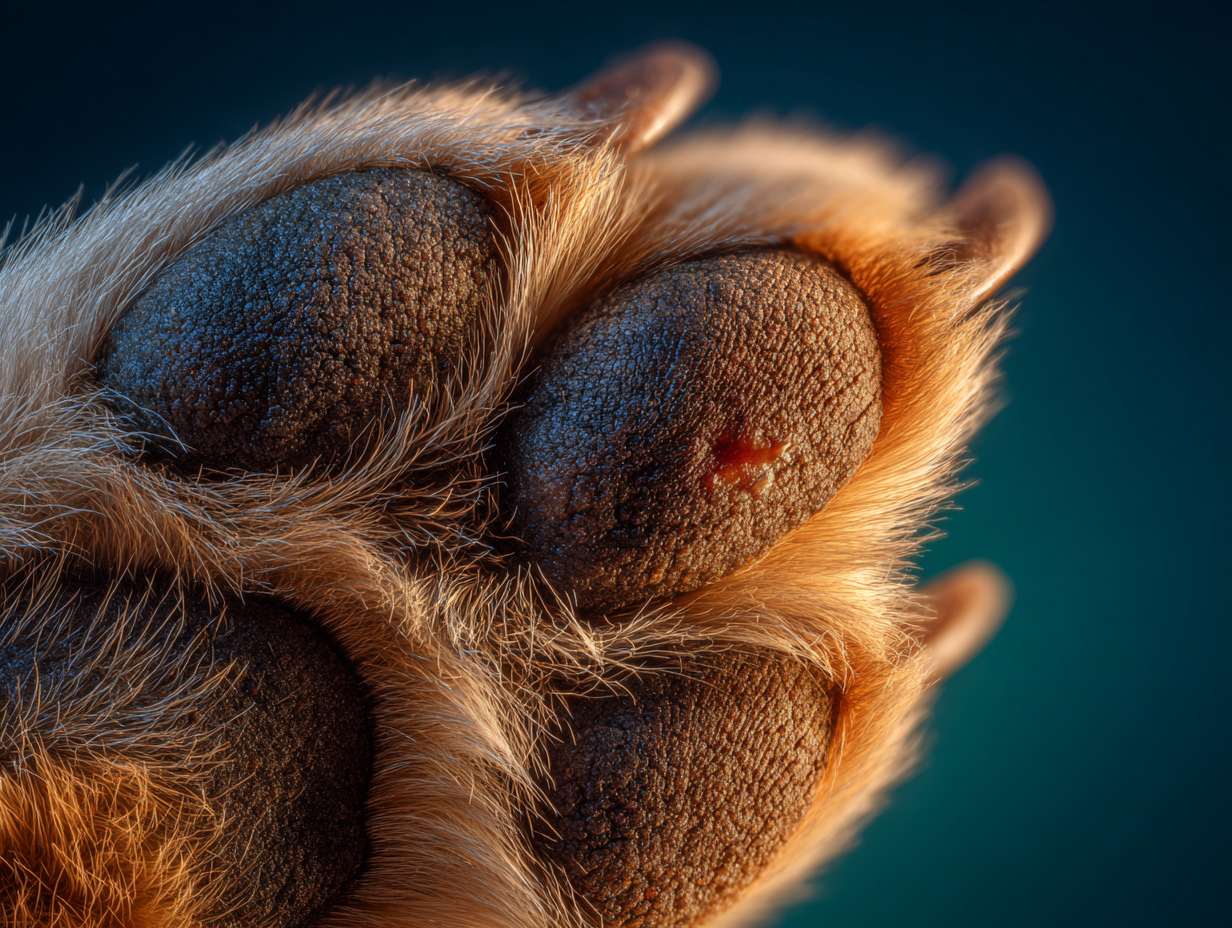
Step 3: Check the paw pads
Paw pads are a common cause of limping:
- Embedded foreign bodies (thorn, glass, hook, pebble).
- Deep wounds that sometimes require suturing.
- Cracks or burns (hot asphalt in summer, de-icing salt in winter).
A dog limping because of an injured paw pad may need sedation to remove the object and apply a dressing.
Step 4: Check the claws
A broken or torn claw can cause sharp pain and immediate limping.
- If the claw has been torn off, protect it with a dressing and see your vet within 48 hours.
- If it is only cracked, trimming under sedation may be necessary.
Assessing the severity of limping
Vets classify limping into several grades:
- intermittent.
- constant and moderate.
- constant and marked.
- severe with limited weight-bearing.
- non-weight-bearing (emergency).
The higher the grade, the greater the likely pain and urgency. From grade 3 onwards, the dog should be seen without delay.
Common causes of limping
Limping can have many different causes. There are three main categories: orthopaedic, neurological, and other causes (infectious, tumour-related, metabolic).
Orthopaedic causes
Arthritis
Arthritis is the most common cause of chronic limping in older dogs. It corresponds to progressive degeneration of the cartilage that covers the joints. This cartilage thins and loses its shock-absorbing properties. Friction becomes painful, triggering inflammation (synovitis) and stiffness.
Dogs with arthritis often show intermittent limping, more pronounced when getting up or after exercise.
Anterior cruciate ligament (ACL) rupture
The anterior cruciate ligament stabilises the knee joint. When it ruptures, the joint becomes unstable, causing sudden, severe limping. This is common in athletic or highly active dogs, as well as in overweight dogs.
Without surgery, instability quickly leads to secondary arthritis.
Hip dislocation
Dislocation refers to the femoral head coming out of the hip socket. It most often occurs after trauma (car accident, fall). It causes sudden limping and an inability to put weight on the paw.
Dislocation must be confirmed by X-ray and often requires surgery.
Patellar luxation
Common in small breeds (Yorkshire Terrier, Chihuahua, Spitz), it is characterised by the kneecap slipping out of its groove. Limping is often intermittent: the dog lifts the paw for a few seconds, then returns to a normal gait.
If left untreated, it can progress to arthritis.
Dysplasia (hip or elbow)
Dysplasia is a developmental joint abnormality: the hip or elbow does not fit together properly. This causes early cartilage wear and promotes arthritis. Certain breeds such as the Labrador or German Shepherd are particularly predisposed.
Affected puppies may show limping from 5–6 months of age.
Osteochondritis dissecans (OCD)
This is a cartilage development disorder affecting young large-breed dogs undergoing rapid growth. The cartilage cracks and may detach, forming a painful "flap" in the joint (often in the shoulder or elbow).
Early surgery is often needed to prevent arthritis.
Legg-Calvé-Perthes disease
This condition affects small breeds (Yorkshire Terrier, Westie, Miniature Poodle). It corresponds to aseptic necrosis of the femoral head, meaning progressive bone death due to impaired blood supply.
It causes progressive limping in young dogs (4–12 months). Treatment is surgical.
Neurological causes
Disc herniation
Common in long-backed breeds (Dachshund, French Bulldog), a herniated disc occurs when a displaced intervertebral disc compresses the spinal cord. It causes limping, mobility difficulties, and even paralysis. It is an emergency when there is loss of weight-bearing or incontinence.
Hereditary polyneuropathies
Certain breeds such as the Malamute or Leonberger are predisposed to degenerative diseases of the peripheral nerves. This leads to muscle weakness, an abnormal gait, and recurrent limping.
Hypothyroidism
A deficiency in thyroid hormones can cause muscle weakness and joint pain. This sometimes presents as chronic limping associated with a general drop in vitality.
Infectious diseases (neosporosis, toxoplasmosis)
These parasites attack the nerves and muscles, causing stiffness and limping. Neosporosis is particularly severe in puppies and can cause progressive paralysis.
Autoimmune diseases (e.g. systemic lupus erythematosus)
In these conditions, the immune system attacks its own tissues, including the joints and muscles. This causes widespread pain that is sometimes mistaken for arthritis.
Other causes
Joint infections
Bacteria can settle in a joint (e.g. following a bite, surgery, or wound). This causes intense, painful inflammation, sometimes with fever. Septic arthritis is an emergency: it requires antibiotic therapy and sometimes surgical drainage.
Lyme disease
Transmitted by ticks, it is caused by the bacterium Borrelia burgdorferi. It causes shifting lameness (moving from one paw to another), sometimes accompanied by fever and significant fatigue.
Bone tumours (osteosarcoma)
In large dogs (Rottweiler, Scottish Deerhound), osteosarcoma is an aggressive bone tumour that weakens the bone. It causes persistent limping and intense pain, often localised to one limb. Diagnosis relies on X-rays and biopsy.
How can you find out the exact cause?
Only a veterinary examination can confirm the cause.
- Clinical examination: observation of gait, palpation, mobility tests.
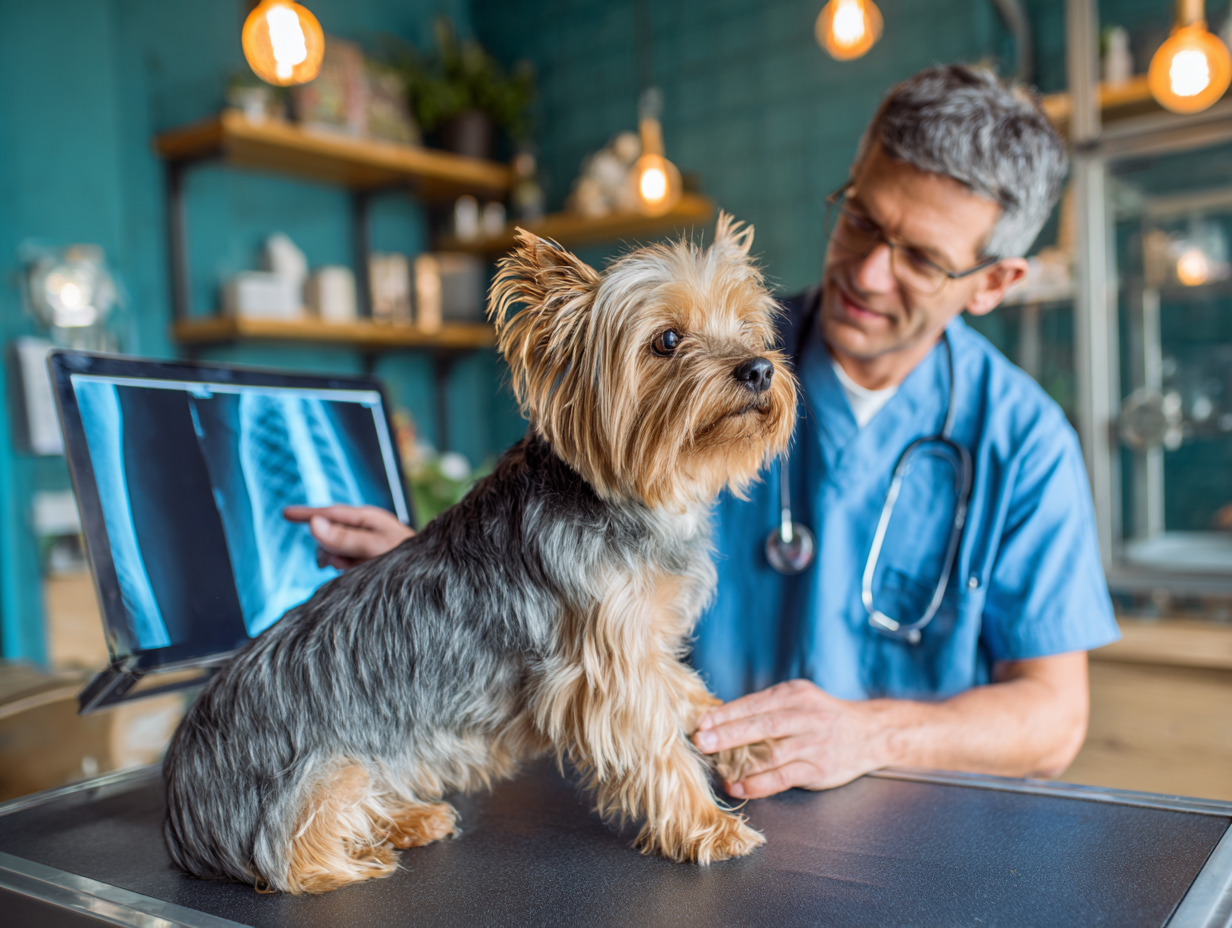
- X-rays: essential for visualising fractures, dislocations, dysplasia, and arthritis.
- CT scan: highly accurate for the skeleton.
- MRI: allows assessment of soft tissues (ligaments, tendons, muscles, spinal cord).
- Ultrasound: useful for detecting tendon or muscle injuries.
Absolute emergencies: when to seek help immediately
- Complete inability to put weight on a paw.
- Obvious deformity of a limb.
- Deep wound with heavy bleeding.
- Intense pain with whining.
- Limping combined with fever (infection).
Key takeaways
- Check whether the dog is putting weight on the paw
- Check for a wound or deformity (fracture/dislocation)
- Check the paw pads (wound, burn, embedded foreign body)
- Check the claws (torn/cracked)
- Assess the severity of the limping
- Have the dog examined by a vet
Link with chronic arthritis
In senior dogs, arthritis remains the most common cause of chronic limping and presents as:
- morning stiffness,
- intermittent limping that improves after warming up,
- gradual reduction in activity.
Preventing and relieving limping in dogs
Limping is not inevitable: early, comprehensive management can often reduce pain, slow the progression of joint disease, and improve your dog's quality of life. Here are the main scientifically validated approaches.
1. Weight management: the top priority
Excess weight is one of the main factors that worsens limping. Every extra kilo puts mechanical pressure on the joints, accelerates cartilage wear, and promotes inflammation.
One study showed that Labradors kept at an optimal weight developed signs of arthritis three years later than their overweight counterparts.
Weight management relies on an appropriate diet, measured portions, and regular monitoring of the dog's body condition (body condition score).
Keeping a dog lean remains one of the most effective and affordable interventions for protecting their joints.
2. Appropriate physical activity
Movement is essential for maintaining muscle, stabilising joints, and keeping tendons and ligaments supple. But it must be adapted to the dog's age, breed, and health status.
- Avoid slippery floors: hardwood, tile, or steep stairs increase the risk of falls and worsening injuries.
- Favour low-impact activities: regular walks (several shorter outings rather than one long one), swimming, walking on soft ground (grass, sand).
- Adjust the intensity: a dog with arthritis will cope better with several 15-minute walks than a single hour-long walk.
Inactivity is harmful: a sedentary dog loses muscle, which increases joint instability.
3. Dietary supplements
Joint supplements are widely used to manage chronic limping, especially in dogs with arthritis. The most extensively studied include:
- Omega-3 fatty acids (EPA and DHA): found in green-lipped mussel oil, algae oil and fish oils such as anchovy, krill and salmon oil. They reduce the production of inflammatory mediators, including prostaglandins and leukotrienes.
Omega-3s lead to a significant improvement in mobility in dogs with arthritis.
- New Zealand green-lipped mussel oil: particularly rich in long-chain omega-3 fatty acids and ETA (eicosatetraenoic acid), with complementary anti-inflammatory properties.
- Other supplements: CBD, devil's claw, turmeric, etc.
Supplements do not replace veterinary treatment, but they provide a well-tolerated long-term approach with few side effects.
4. Functional rehabilitation: physiotherapy and hydrotherapy
Canine rehabilitation has developed considerably in recent years, with encouraging results in managing limping.
- Physiotherapy: muscle-strengthening exercises, gentle stretching, proprioception work (balance, coordination).
- Hydrotherapy: walking on an underwater treadmill or controlled swimming. Water reduces the load on the joints while allowing effective muscle work.
These methods should be supervised by a vet or a qualified animal physiotherapist.
5. Regular veterinary follow-up
A predisposed dog (large breed, history of dysplasia, senior dog) should have at least one veterinary check-up a year. This includes:
- A clinical examination of mobility and joints.
- Weight monitoring and nutritional advice.
- If necessary, X-rays to track the progression of arthritis.
- Treatment adjustments (adding or stopping anti-inflammatories, adapting the rehabilitation plan).
Regular follow-up makes it possible to detect early signs of deterioration and adapt care quickly.
6. Daily environment adjustments
Beyond medical aspects, a few simple changes to everyday life can reduce pain and prevent relapses:
- Install non-slip rugs on the floor.
- Use a ramp to get in and out of the car.
- Raise the food bowl slightly to reduce strain on the neck.
- Provide an orthopaedic bed, firm but comfortable, with memory foam.
FAQ
Conclusion
Limping in dogs is a warning sign that should never be ignored. Whether it is traumatic, orthopaedic, neurological or linked to arthritis, it generally reflects pain or discomfort that affects the animal's mobility and wellbeing.
An early veterinary diagnosis, combined with appropriate care such as weight management, gentle activity, joint supplements and functional rehabilitation, can often slow the progression of joint problems and improve the dog's quality of life over the long term.
As an owner, you play a key role: watch carefully for the first signs, adapt your companion's daily routine and take preventive measures to preserve their mobility for as long as possible.
Scientific references
- Kealy RD, Lawler DF, Ballam JM, Lust G, Biery DN, Smith GK, Mantz SL. Evaluation of the effect of limited food consumption on radiographic evidence of osteoarthritis in dogs. J Am Vet Med Assoc. 2000 Dec 1;217(11):1678-80. doi: 10.2460/javma.2000.217.1678. PMID: 11110459.
- Barbeau-Grégoire M, Otis C, Cournoyer A, Moreau M, Lussier B, Troncy E. A Systematic Review and Meta-Analysis of Enriched Therapeutic Diets and Nutraceuticals in Canine and Feline Osteoarthritis. Int J Mol Sci. 2022;23(18):10384. doi:10.3390/ijms231810384.
- Marsolais GS, Dvorak G, Conzemius MG. Effects of postoperative rehabilitation on limb function after cranial cruciate ligament repair in dogs. J Am Vet Med Assoc. 2003;222(6):762-766. doi:10.2460/javma.2003.222.762.
This article was written by the R&D team at Laboratoire Sensilia, experts in animal nutrition.



