
Devil's claw: does it actually work?
Dog osteoarthritis and devil's claw: what the science says, safety limits, and proven alternatives, including omega-3 fatty acids, weight loss and gentle exercise, for lasting joint comfort.
Pauline Durepaire
Published in
Natural IngredientsOsteoarthritis is one of the most common joint disorders in dogs. Faced with this problem, many owners look for natural alternatives to relieve their companion.
Among them, Harpagophytum procumbens, better known as devil's claw, is often presented as a plant with anti-inflammatory properties. But what do scientific studies really say, and above all, is it effective in dogs?
What is devil’s claw ?
Harpagophytum procumbens, better known as devil's claw, is a creeping perennial plant native to the arid regions of southern Africa, mainly the Kalahari Desert, Namibia and Botswana. It owes its nickname to the characteristic hooks on its fruits, which can latch onto animals' paws and be dispersed in nature.
It is mainly the tuberised secondary root of the plant that is used in phytotherapy. It contains a high concentration of active compounds, notably harpagosides – natural molecules belonging to the iridoid family, known to help calm inflammation and pain. These largely explain the plant's anti-inflammatory and analgesic effects.
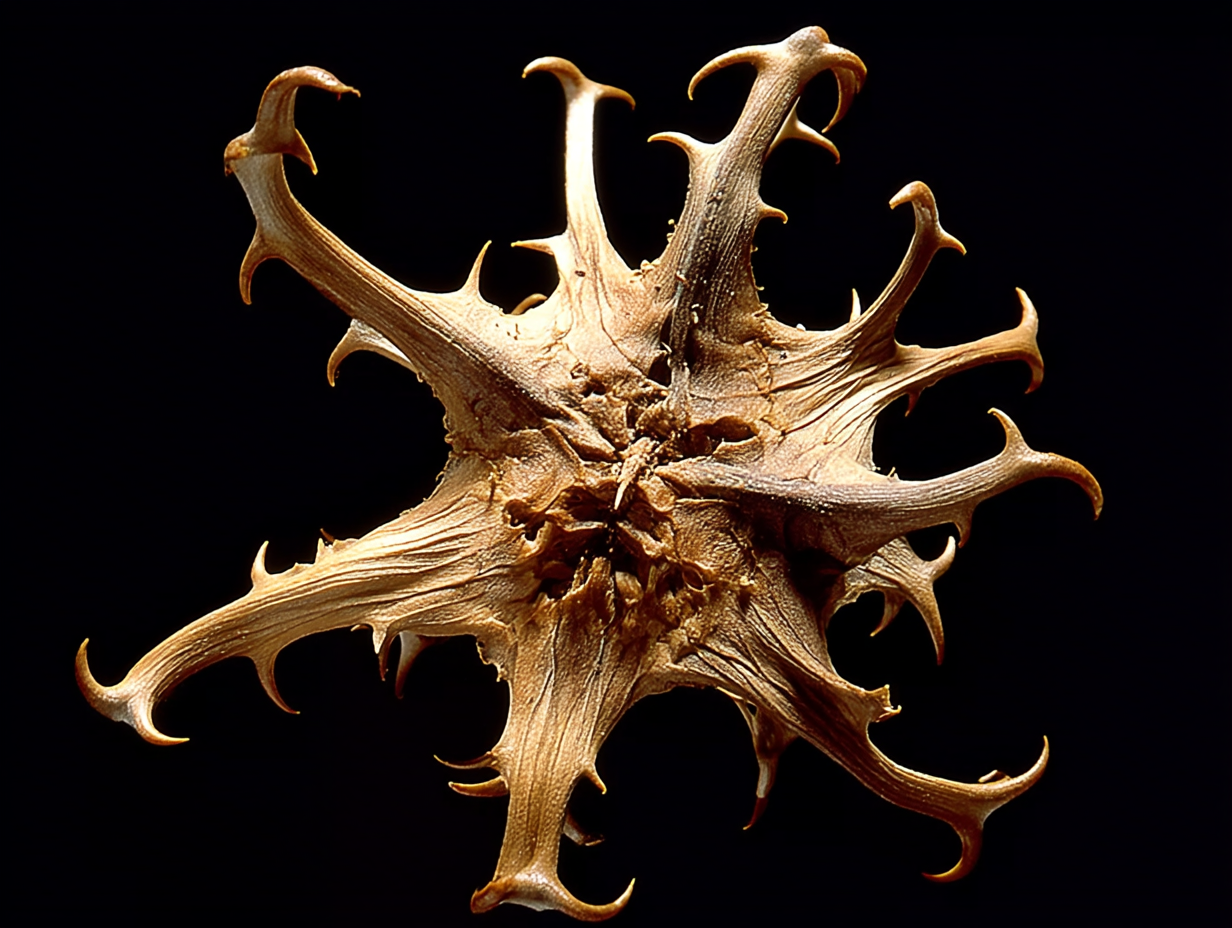
Historically, the indigenous San and Khoikhoi peoples of southern Africa used harpagophytum to relieve fever, digestive disorders, joint pain and even certain wounds. In the early 20th century, the plant was introduced to Europe by German colonists, where it quickly attracted interest from natural medicine for its action on rheumatic pain. Its use became widespread in the 1970s–1980s, to the point that harpagophytum became a species threatened by overexploitation. Today, harvesting is strictly regulated to preserve the natural resource.
It is available as capsules, tablets, powders or liquid extracts, used in both human medicine and veterinary phytotherapy.
This long tradition of use, combined with its integration into modern medicine, explains why harpagophytum is often offered as a natural alternative to relieve canine osteoarthritis.
What do studies say about harpagophytum?
The roots of harpagophytum contain several natural molecules that explain its anti-inflammatory and analgesic effects. Among them, iridoid glycosides – and especially harpagoside – play a major role. Flavonoids (antioxidants), phytosterols (mild anti-inflammatories) and phenolic acids (soothing agents) are also present.
These compounds work together to reduce inflammation and relieve pain. They:
- block two enzymes (COX-2 and LOX) responsible for producing prostaglandins and leukotrienes, messengers that intensify pain, fever and swelling;
- reduce the production of pro-inflammatory cytokines (TNF-α, IL-1β, IL-6);
- protect cells against oxidative stress;
- and decrease nerve sensitivity in painful areas.
In the laboratory, harpagoside has been shown to reduce the release of inflammatory molecules such as nitric oxide and TNF-α, confirming a direct action to calm the inflammatory response (Jang et al., 2003).
In vitro studies on cells
Studies carried out on cells show that harpagophytum acts at several levels. Its standardised extracts reduce the production of inflammatory proteins, prostaglandins and COX-2.
A 60% alcohol harpagophytum extract reduced the [REDACTED] of these substances while blocking AP-1 — an inflammatory "switch" — without affecting NF-κB, another key regulatory pathway.
For its part, purified harpagoside blocks the inflammatory cascade and limits the formation of molecules involved in pain and stiffness (Huang et al., 2006).
This work confirms that the plant acts on several levers at once to soothe inflamed tissues.
Clinical studies in humans
In humans, the evidence is stronger. Several clinical trials have shown:
- a moderate but significant reduction in pain in knee and hip osteoarthritis,
- and improved mobility in chronic low back pain.
A randomised trial showed that 600 mg/day of harpagophytum extract improved pain and mobility in osteoarthritis patients (Chrubasik et al., 1999).
A meta-analysis confirms efficacy superior to placebo, but variable depending on extract quality and dose used (Brien et al., 2006).
Clinical studies in dogs
No published clinical study has yet evaluated the efficacy of harpagophytum in osteoarthritic dogs. A few anecdotal reports suggest improved mobility, but these observations remain empirical and insufficient to draw scientific conclusions.
In summary, the data support plausible efficacy in humans, but harpagophytum remains insufficiently studied in dogs.
Harpagophytum should therefore be considered as complementary support, to be integrated into comprehensive care under veterinary supervision.
Limitations and precautions for use
Despite its image as a "gentle" plant and its long history of use, harpagophytum is not a miracle remedy and its use in dogs should be approached with caution.
Limites scientifiques
- No clinical data in dogs
- Modest results: even in humans, effects are often described as moderate and variable from one individual to another.
- Variable extract quality: harpagoside content (the active compound) can vary greatly between preparations. Yet it is this dosage that determines efficacy.
Effets secondaires et contre-indications
Harpagophytum is generally well tolerated, but some dogs may experience digestive upset (diarrhoea, vomiting, loss of appetite), mild hypotension, or possible interactions with certain treatments (anti-inflammatories, anticoagulants).
Its use is not recommended:
- in dogs with gastroduodenal ulcers or chronic gastritis,
- in cases of severe heart or liver disease,
- in pregnant or nursing bitches (as a precaution, due to lack of data).
Importance of veterinary follow-up
Harpagophytum should not be given as prolonged self-medication. It is ideally used as part of comprehensive care (appropriate diet, weight management, scientifically validated supplements, physiotherapy) and with veterinary guidance.
Key takeways
- No demonstrated efficacy in dogs with joint disorders
- No veterinary studies available on osteoarthritic dogs
- Risk of side effects
- Contraindicated with certain conditions and treatments
Validated alternatives
Although devil's claw may provide natural support, it should not be seen as the only answer to canine osteoarthritis. The most effective approach remains multifactorial, combining several scientifically validated levers.
1. Marine Oméga-3
The EPA and DHA fatty acids from marine sources, such as green-lipped mussel oil or algae oil, have demonstrated their ability to reduce joint inflammation and improve mobility in dogs. Unlike harpagophytum, their efficacy is documented by numerous veterinary clinical trials.
2. Weight management
An overweight dog places extra mechanical stress on its joints, which worsens pain and accelerates osteoarthritis progression. Weight loss is often the first veterinary recommendation for improving joint comfort.
3. Adapted physical exercise
Contrary to popular belief, an osteoarthritic dog should not remain inactive. Gentle, regular exercise (controlled walks, hydrotherapy, physiotherapy) maintains muscle mass and prevents joint stiffness.
4. Adapting daily lifestyle
Beyond diet and supplements, the dog's environment plays a key role in joint comfort. A few simple measures can make a difference:
- install non-slip mats to prevent slips,
- provide orthopaedic or memory-foam bedding to reduce pressure on joints,
- limit access to stairs,
- favour soft flooring over slippery tile or hardwood.
FAQ
Conclusion
Devil's claw is a plant used for centuries to relieve joint pain. Its active compounds, notably harpagoside, have anti-inflammatory mechanisms demonstrated in the laboratory and partially confirmed in humans. In dogs, however, clinical evidence is still lacking.
Harpagophytum may be tried as a supplement under veterinary supervision, but it does not replace the best-supported approaches: omega-3 fatty acids, weight management, gentle exercise, physiotherapy.
Scientific references
- Jang MH, Lim S, Han SM, Park HJ, Shin I, Kim JW, Kim NJ, Lee JS, Kim KA, Kim CJ. Harpagophytum procumbens suppresses lipopolysaccharide-stimulated expressions of cyclooxygenase-2 and inducible nitric oxide synthase in fibroblast cell line L929. J Pharmacol Sci. 2003 Nov;93(3):367-71. doi: 10.1254/jphs.93.367. PMID: 14646256.
- Bernd L. Fiebich, Eduardo Muñoz, Thorsten Rose, Gabriele Weiss, Gerard P. McGregor. Molecular Targets of the Antiinflammatory Harpagophytum procumbens (Devil’s claw): Inhibition of TNFa and COX-2 Gene Expression by Preventing Activation of AP-1. Phytother. Res. 26: 806–811 (2012). DOI: 10.1002/ptr.3636
- Huang TH, Tran VH, Duke RK, Tan S, Chrubasik S, Roufogalis BD, Duke CC. Harpagoside suppresses lipopolysaccharide-induced iNOS and COX-2 expression through inhibition of NF-kappa B activation. J Ethnopharmacol. 2006 Mar 8;104(1-2):149-55. doi: 10.1016/j.jep.2005.08.055. Epub 2005 Oct 3. PMID: 16203115.
- Lanhers MC, Fleurentin J, Mortier F, Vinche A, Younos C. Anti-inflammatory and analgesic effects of an aqueous extract of Harpagophytum procumbens. Planta Med. 1992 Apr;58(2):117-23. doi: 10.1055/s-2006-961411. PMID: 1529021.
- Chrubasik S, Zimpfer C, Schütt U, Ziegler R. Effectiveness of Harpagophytum procumbens in treatment of acute low back pain. Phytomedicine. 1996 May;3(1):1-10. doi: 10.1016/S0944-7113(96)80003-1. PMID: 23194854.
- Brien S, Lewith GT, McGregor G. Devil's Claw (Harpagophytum procumbens) as a treatment for osteoarthritis: a review of efficacy and safety. J Altern Complement Med. 2006 Dec;12(10):981-93. doi: 10.1089/acm.2006.12.981. PMID: 17212570.
- Wegener T, Lüpke NP. Treatment of patients with arthrosis of hip or knee with an aqueous extract of devil's claw (Harpagophytum procumbens DC.). Phytother Res. 2003 Dec;17(10):1165-72. doi: 10.1002/ptr.1322. PMID: 14669250.
- Denner SS. A review of the efficacy and safety of devil's claw for pain associated with degenerative musculoskeletal diseases, rheumatoid, and osteoarthritis. Holist Nurs Pract. 2007 Jul-Aug;21(4):203-7. doi: 10.1097/01.HNP.0000280932.65581.72. PMID: 17627199.
This article was written by the R&D team at Laboratoire Sensilia, experts in animal nutrition.



