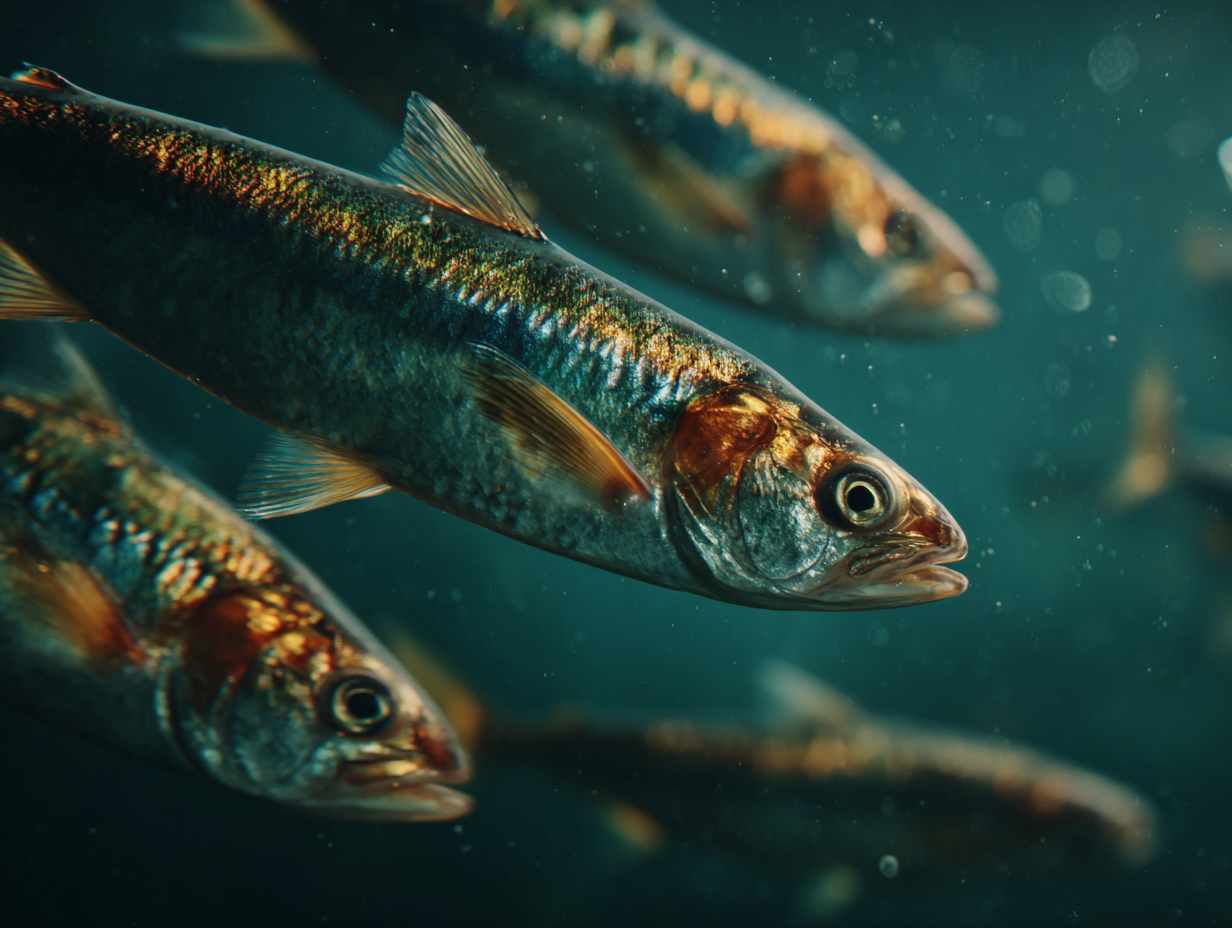
Fish Oil for Dogs: Benefits, Risks & Better Oméga-3 Sources
Oily fish provide joint-supporting omega-3 fatty acids for dogs, but their quality can vary. Discover the concerns surrounding overfishing, contaminants and declining EPA and DHA levels, as well as safer alternatives.
Pauline Durepaire
Published in
Natural IngredientsOsteoarthritis can severely affect dogs’ mobility. Omega-3 fatty acids, particularly EPA and DHA, are among the most recognised nutritional solutions for supporting joint function and modulating inflammation.
These fatty acids are naturally present in fatty fish (sardine, salmon, anchovy).
However, these sources face major concerns: declining nutritional content, the risk of contaminant bioaccumulation, and ecological pressure.
At Laboratoire Sensilia, our commitment is to provide effective, pure omega-3 fatty acids for your dog while minimising environmental impact.
This article reveals the current challenges associated with fish-derived sources, drawing on scientific studies, to help you choose an omega-3 supplement that is truly safe and effective.
Why have fatty fish long been the reference for Oméga-3?
For decades, fatty fish have played a central role as a source of omega-3 fatty acids with recognised health benefits. There is a simple reason for this: they are among the few dietary sources naturally rich in EPA (eicosapentaenoic acid) and DHA (docosahexaenoic acid), the two marine fatty acids considered most beneficial for the body.
Contrary to what one might imagine, fish do not synthesise these omega-3 fatty acids themselves. They accumulate them by feeding on marine microalgae, plankton or organisms that consume them. This gives fish a particularly valuable lipid profile, with readily absorbed omega-3 fatty acids in proportions that are difficult to find in terrestrial foods.
Historically, several factors reinforced this status as a "reference":
- A naturally high concentration of EPA+DHA in species such as sardine, mackerel, herring, or anchovy.
- Regular availability, which made it easy to consume them fresh, canned, or smoked.
- Favorable bioavailability, as omega-3 fatty acids from fish are predominantly present in triglyceride form, which is efficiently processed by the digestive system.
- A strong cultural and nutritional role, particularly in regions where consumption of fatty fish is associated with good cardiovascular health.
Before alternative sources such as microalgae became available, fatty fish represented the simplest, most direct and most natural way to obtain the omega-3 fatty acids the body needs.
Which fish are truly rich in EPA and DHA?
Not all species are equal when it comes to providing marine omega-3 fatty acids.
So-called "fatty" fish have higher EPA and DHA levels for a simple reason: they store more lipids in their tissues, and these lipids come mainly from their diet of microalgae, zooplankton and small crustaceans naturally rich in omega-3 fatty acids.
Unlike lean fish (such as cod or sole), which mainly use their muscle reserves for energy, fatty fish accumulate fat in their tissues, skin, and abdominal cavity. This fat serves as an energy reserve for long migrations, cold waters, or periods when food is less abundant.
Among these fatty fish, there is a wide variety of species:
Oméga-3 levels by fish species
| Species | EPA (g) | DHA (g) | EPA + DHA (g) |
|---|---|---|---|
| Mackerel | 0,9 - 1,0 | 1,0 - 1,6 | 1,9 - 2,5 |
| Herring | 0,7 - 1,0 | 0,7 - 0,9 | 1,6 - 1,7 |
| Salmon | 0,4 - 0,8 | 0,6 - 1,2 | 1,0 - 1,8 |
| Anchovies / Sardines | 0,4 - 0,5 | 0,6 - 0 | 1,0 - 1,4 |
| Trout | 0,4 - 1,2 | 0,4 - 1,8 | 0,5 - 3,0 |
| Tuna | 0,3 - 0,4 | 1,0 - 1,2 | 1,3 - 1,6 |
What do clinical studies say about dogs?
Numerous studies of fish oils rich in EPA and DHA show a consistent pattern of results: modulation of inflammation, a moderate but genuine improvement in joint comfort and several beneficial effects on metabolic and cardiovascular profiles.
Mobility and joint comfort
Several controlled trials have evaluated EPA/DHA-enriched foods in arthritic dogs:
- Improvement in weight distribution on the painful limb and better daily mobility (Roush et al.)
- Significant improvements in locomotion scores when the omega-6 to omega-3 ratio is substantially reduced (Fritsch et al.)
- Modulation of inflammation (decrease in pro-inflammatory leukocytes) (Park et al.)
These studies show progressive benefits, generally visible after 6 to 12 weeks of supplementation.
At the cellular level, Curtis et al. demonstrated that EPA and DHA reduce the production of inflammatory mediators (PGE2, NO, MMP) in arthritic canine chondrocytes, confirming a direct mechanism of action on joint tissues.
Inflammation, oxidative stress, and metabolism
Studies also show positive systemic effects:
- Increase in adiponectin levels, a hormone associated with better metabolic sensitivity (Mazaki-Tovi et al.).
- Reduction of lipid peroxidation markers and decrease in DNA damage (Yin et al.).
- Improvement in lipid profile: decrease in total cholesterol and LDL, increase in EPA/DHA incorporation into blood phospholipids (Del Ciampo et al.).
These results suggest a decrease in low-grade inflammation and better cellular protection.
Heart protection and exercise adaptation
- Reduction in the size of the necrotic zone in an experimental infarction model after six weeks of fish oil (McEntee et al.).
- Better physiological response to exercise, with a decrease in post-exercise heart rate (O'Sullivan et al.).
Oméga-3 benefits from fatty fish
- Significantly improve mobility in arthritic dogs
- Reduce inflammation and improve several biomarkers
- Show cardioprotective signals and better exercise adaptation
The limitations and drawbacks of fish oil
While fish oil has long been considered the most accessible source of EPA and DHA, several major drawbacks are now well documented. They concern nutritional quality as much as sustainability and safety.
Overfishing and impact on biodiversity
Small fatty fish such as anchovy, sardine, herring and mackerel are central to the global production of fish oil and fish meal. They also form the base of the marine food chain.
Bach et al. show that fish oil production increasingly relies on stocks that are fully exploited or overexploited, and that "ecosystem scarcity" increases as fishing for these forage fish intensifies.
This study highlights two major risks:
- The large-scale capture of fish rich in omega-3 fatty acids reduces their availability for marine predators (birds, marine mammals and carnivorous fish).
- Exploitation beyond the natural renewal rate compromises the ocean's long-term capacity to produce EPA and DHA through the food chain.
For their part, FAO reports (2020–2022) show that more than one third of global stocks are overexploited, compared to only 10% in the 1970s, confirming a structural trend.
Contamination with pollutants and heavy metals
Because they are naturally rich in lipids, fatty fish also tend to accumulate more environmental contaminants. Several recent studies show that this accumulation concerns heavy metals, persistent organic pollutants, and microplastics alike.
The study by Nøstbakken et al. shows that fatty fish, particularly salmon, mackerel, and herring, can contain measurable levels of dioxins and dioxin-like PCBs, compounds that accumulate in adipose tissue over time. Even though observed concentrations generally remain within regulatory limits, they are systematically higher in fatty species than in lean fish, confirming accumulation directly linked to lipid content.
An analysis of the Italian market conducted by Nevigato et al. revealed that certain fish oil supplements show variable levels of oxidation and contaminants, suggesting that quality is not uniform among products available on the market and that purification does not always completely eliminate all undesirable traces.
These data complement the opinions of the European authority (EFSA), which reminds us that fish is the primary dietary source of methylmercury and that lipophilic contaminants persist durably in marine ecosystems.
Overall, studies show that despite their nutritional value, fatty fish can contain a range of contaminants whose levels depend on the species, age and catch area. This is an important factor when evaluating different omega-3 sources.
A declining Oméga-3 content
Several recent studies highlight a concerning trend: the decrease in the natural EPA and DHA content of wild fish, particularly in regions where fishing pressure is strongest.
When stocks of small pelagic fish are overexploited, they no longer have time to recover or rebuild their omega-3 reserves. This phenomenon is intensified by a second factor: the reduction in the primary production of omega-3 fatty acids by microalgae, a direct consequence of water warming.
Between 2000 and 2023, in the Mediterranean Sea, annual EPA + DHA catches fell from approximately 15 tonnes to 6 tonnes, a drop of nearly 60%.
Farmed fish are not spared. They are traditionally fed with fish meal and fish oil, themselves derived from wild stocks, which perpetuates fishing pressure.
To reduce this dependence, some aquaculture farms now replace these ingredients with soy or other plant sources that contain no EPA or DHA, which consequently reduces the omega-3 concentration in farmed fish.
As a result, on some farms, salmon EPA + DHA levels have decreased by approximately 50% over roughly a decade (Sprague et al.).
What alternatives to fish oils?
In response to the growing limitations of fatty fish and the oils derived from them, several omega-3 sources are emerging as safer, more stable and significantly more sustainable options. Two stand out in particular: microalgae oil and green-lipped mussel oil.
L’huile de microalgue
Marine microalgae are the organisms that naturally produce EPA and DHA. Fish are merely their "accumulators." By going directly to the source, microalgae oil offers several major advantages:
- Stable composition: EPA/DHA levels do not depend on season or geographic area.
- Superior purity: grown in controlled environments, microalgae are not exposed to marine contaminants (heavy metals, dioxins, PCBs).
- Optimal sustainability: no pressure on marine ecosystems, no harvesting of wild fish.
- Complete traceability: each batch can be monitored throughout the supply chain, which improves the reproducibility of clinical results.
It is now a preferred source of EPA and DHA for many laboratories committed to animal and human health.
Discover our article on the benefits of algae oil
L’huile de moule verte
The New Zealand green-lipped mussel (Perna canaliculus) has a distinctive lipid profile containing:
- EPA and DHA,
- other rare omega-3 fatty acids (including ETA) recognised for their anti-inflammatory effects,
- natural antioxidants.
It also comes from a more tightly regulated supply chain, with harvests strictly controlled by the New Zealand government, which limits pressure on wild stocks.
Discover our article: Green-lipped mussel, remedy for osteoarthritis
Pourquoi ces alternatives s’imposent aujourd’hui ?
Because they simultaneously address the three challenges posed by fish oil:
- Documented clinical efficacy for joint support
- Enhanced purity and safety thanks to the absence or control of contaminants
- Strongly reduced environmental impact
They provide dogs with effective omega-3 fatty acids while avoiding the drawbacks associated with variability, oxidation and the uncertain sustainability of fatty fish.
FAQ
Conclusion
Fatty fish have long been the benchmark for providing EPA and DHA, two omega-3 fatty acids that are essential for joint support. Studies show that they can improve mobility and reduce inflammation in arthritic dogs when provided in sufficient quantity.
However, current knowledge also highlights their limitations: significant variability in omega-3 content, contaminant accumulation and a gradual decline in EPA and DHA levels linked to overfishing and climate change. These factors make fish oil less reliable and less sustainable today.
That is why more stable and cleaner alternatives are emerging, such as microalgae oil and green-lipped mussel oil, which can provide highly bioavailable omega-3 fatty acids from sustainable supply chains, with no marine contaminants.
At Laboratoire Sensilia, this shift guides our work: offering omega-3 sources that are both effective and responsible. PERNIXOL®, formulated with green-lipped mussel oil extracted using supercritical CO₂ and microalgae oil, reflects this approach by providing a concentrated, pure source of EPA and DHA while respecting the oceans.
This provides a way to support dogs’ mobility with omega-3 fatty acids suited to today’s scientific and ecological challenges.
Discover PERNIXOL®
Scientific references
- Adler N, Schoeniger A, Fuhrmann H. (2018). Polyunsaturated fatty acids influence inflammatory markers in a cellular model for canine osteoarthritis. J Anim Physiol Anim Nutr (Berl), 102(2): e623–e632. doi: 10.1111/jpn.12804. PMID: 29030883.
- Bach V, Hélias A, Muhl M, et al. (2022). Assessing overfishing based on the distance-to-target approach. Int J Life Cycle Assess, 27: 573–586. https://doi.org/10.1007/s11367-022-02042-z
- Barrouin-Melo SM, Anturaniemi J, Sankari S, Griinari M, Atroshi F, Ounjaijean S, Hielm-Björkman AK. (2016). Evaluating oxidative stress, serological- and haematological status of dogs suffering from osteoarthritis, after supplementing their diet with fish or corn oil. Lipids Health Dis, 15: 139. doi: 10.1186/s12944-016-0304-6. PMCID: PMC5002171.
- Enomoto M, Hash J, Cole T, Porcel Sanchez MD, Thomson A, Perry E, et al. (2024). Response to treatment with grapiprant as part of a standard multimodal regimen in young dogs with appendicular joint osteoarthritis associated pain. Front Vet Sci, 11: 1461628. doi: 10.3389/fvets.2024.1461628. PMCID: PMC11541952.
- FAO. (2022). The State of World Fisheries and Aquaculture 2022. Towards Blue Transformation. Rome, FAO. https://doi.org/10.4060/cc0461en
- Fritsch DA, Allen TA, Dodd CE, Jewell DE, Sixby KA, Leventhal PS, Hahn KA. (2010). Dose-titration effects of fish oil in osteoarthritic dogs. J Vet Intern Med, 24(5): 1020–1026. doi: 10.1111/j.1939-1676.2010.0572.x. PMID: 20707845.
- Fritsch DA, Allen TA, Dodd CE, Jewell DE, Sixby KA, Leventhal PS, Brejda J, Hahn KA. (2010). A multicenter study of the effect of dietary supplementation with fish oil omega-3 fatty acids on carprofen dosage in dogs with osteoarthritis. J Am Vet Med Assoc, 236(5): 535–539. doi: 10.2460/javma.236.5.535. PMID: 20187817.
- Hansen RA, Harris MA, Pluhar GE, Motta T, Brevard S, Ogilvie GK, Fettman MJ, Allen KG. (2008). Fish oil decreases matrix metalloproteinases in knee synovia of dogs with inflammatory joint disease. J Nutr Biochem, 19(2): 101–108. doi: 10.1016/j.jnutbio.2007.01.008. PMID: 17531456.
- Hielm-Björkman A, Roine J, Elo K, Lappalainen A, Junnila J, Laitinen-Vapaavuori O. (2012). An un-commissioned randomized, placebo-controlled double-blind study to test the effect of deep sea fish oil as a pain reliever for dogs suffering from canine OA. BMC Vet Res, 8: 157. doi: 10.1186/1746-6148-8-157. PMID: 22950577.
- Mozaffarian D. (2007). Fish oil and prevention of atrial fibrillation. J Am Coll Cardiol, 50(15): 1513–1514. doi: 10.1016/j.jacc.2007.05.045. PMID: 17919573.
- Nevigato T, Masci M, Caproni R. (2021). Quality of fish-oil-based dietary supplements available on the Italian market: A preliminary study. Molecules, 26(16): 5015. doi: 10.3390/molecules26165015. PMCID: PMC8398760.
- Nøstbakken OJ, Rasinger JD, Hannisdal R, Sanden M, Frøyland L, Duinker A, Frantzen S, Dahl LM, Lundebye AK, Madsen L. (2021). Levels of omega 3 fatty acids, vitamin D, dioxins and dioxin-like PCBs in oily fish; a new perspective on the reporting of nutrient and contaminant data for risk-benefit assessments of oily seafood. Environ Int, 147: 106322. doi: 10.1016/j.envint.2020.106322. PMID: 33348102.
- Oregon State University. Omega-3 content in fish. Analytical table.
- Pellegrino FJ, Risso A, Relling AE, Corrada Y. (2019). Physical response of dogs supplemented with fish oil during a treadmill training programme. J Anim Physiol Anim Nutr (Berl), 103(2): 653–660. doi: 10.1111/jpn.13033. PMID: 30520172.
- Ravić B, Debeljak-Martacić J, Pokimica B, Vidović N, Ranković S, Glibetić M, Stepanović P, Popović T. (2022). The effect of fish oil-based foods on lipid and oxidative status parameters in police dogs. Biomolecules, 12(8): 1092. doi: 10.3390/biom12081092. PMCID: PMC9405924.
- Rodrigues RBA, Zafalon RVA, Rentas MF, Risolia LW, Macedo HT, Perini MP, Silva AMGD, Marchi PH, Balieiro JCC, Mendes WS, Vendramini THA, Brunetto MA. (2023). The supplementation of docosahexaenoic acid-concentrated fish oil enhances cognitive function in puppies. Animals (Basel), 13(18): 2938. doi: 10.3390/ani13182938. PMCID: PMC10525578.
- Roush JK, Cross AR, Renberg WC, Dodd CE, Sixby KA, Fritsch DA, Allen TA, Jewell DE, Richardson DC, Leventhal PS, Hahn KA. (2010). Evaluation of the effects of dietary supplementation with fish oil omega-3 fatty acids on weight bearing in dogs with osteoarthritis. J Am Vet Med Assoc, 236(1): 67–73. doi: 10.2460/javma.236.1.67. PMID: 20043801.
This article was written by the R&D team at Laboratoire Sensilia, experts in animal nutrition.



