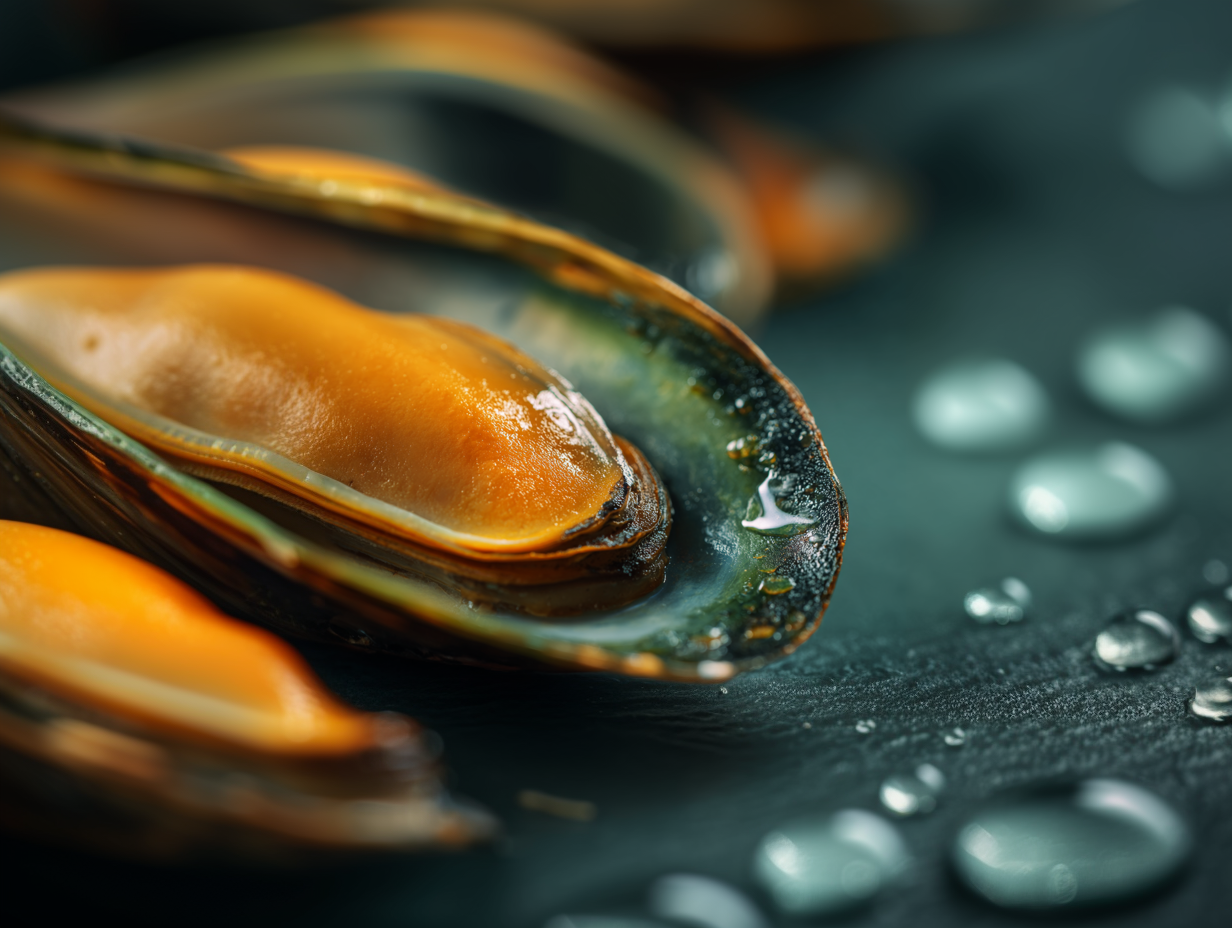
Green-lipped mussel for osteoarthritis: a natural joint support for dogs
Green-lipped mussel for dogs with osteoarthritis: evidence-backed benefits, oil vs powder, dosing and how long to supplement for better mobility and joint comfort.
Pauline Durepaire
Published in
Natural IngredientsOsteoarthritis affects millions of animals worldwide, impacting their daily wellbeing.
According to the UK organisation Canine Arthritis Management, osteoarthritis is the leading cause of chronic pain in dogs, with 80% of dogs over 8 years old and 35% of dogs of all ages affected.
In cats, two scientific studies (Enomoto, 2020; Hardie, 2002) found that nearly 40% show clinical signs of osteoarthritis, while 90% of cats over 12 years old show radiographic evidence of the condition, almost double the rate observed in dogs.
This cartilage degeneration causes pain, inflammation and loss of mobility, signs that significantly impair the animal's quality of life.
Given the limitations of non-steroidal anti-inflammatory drugs (NSAIDs), known for their digestive and renal side effects, veterinarians are increasingly turning to better-tolerated natural solutions. Among them, the New Zealand green-lipped mussel (Perna canaliculus) stands out as one of the most promising active ingredients for supporting joint health in dogs.
Where does the green-lipped mussel come from?
The green-lipped mussel, Perna canaliculus, is a mussel species native to New Zealand, primarily in the Marlborough Sounds, a region home to eight marine ecosystems and several protected marine areas.
Interest in the green-lipped mussel stems from observations that coastal Māori had lower rates of osteoarthritis than their European peers or inland Māori.
Consequently, the anti-inflammatory properties of this mussel have been the subject of extensive research through laboratory research, in vivo studies and clinical trials.
The green-lipped mussel is farmed under strict quotas imposed by the New Zealand government. Its cultivation is sustainable and does not adversely affect marine biodiversity. The mussels undergo selective breeding and are raised in hatcheries for several months, where they feed on microalgae, ensuring full traceability and improved growth. They are then transferred to their natural environment and suspended from ropes, where they are farmed for a further two years. This farming method helps preserve marine ecosystems.
Furthermore, most companies specialising in green-lipped mussel farming in New Zealand contribute to conservation and habitat restoration programmes to promote marine biodiversity.
Discover the origin of the New Zealand green-lipped mussel
Why the green-lipped mussel is beneficial for joints
The green-lipped mussel is rich in essential omega-3 fatty acids, particularly eicosapentaenoic acid (EPA) and docosahexaenoic acid (DHA), recognised for their anti-inflammatory properties.
The omega-3 fatty acids in green-lipped mussel reduce the production of prostaglandins and leukotrienes, two key molecules in joint inflammation. They therefore help:
- the reduction of pain and stiffness,
- the protection of cartilage against degradation.
The green-lipped mussel is also one of the few species in the world to contain eicosatetraenoic acid (ETA). Like other omega-3 fatty acids, ETA can block the enzymes responsible for inflammation. But ETA goes further, acting at the genetic level to reduce the production of these inflammatory enzymes.
Finally, the green-lipped mussel is an excellent source of antioxidants and vitamins, making it a particularly nutrient-rich food.
Read our article on the benefits of omega-3 fatty acids for joint inflammation
What clinical studies say
The US National Library of Medicine lists more than 220 studies on the green-lipped mussel. While most concern its effects on joint problems such as osteoarthritis, some also explore other areas:
- support for the gut microbiome,
- muscle recovery after exertion,
- cognitive function in people with hyperactivity,
- respiratory effects in people with asthma.
Finally, several studies have assessed its bioavailability (its ability to be absorbed by the body) as well as its potential side effects, which are generally rare and mild.
This research has provided a better understanding of the anti-inflammatory mechanism of the green-lipped mussel.
It acts by modulating certain chemical reactions linked to arachidonic acid, a molecule naturally present in the body. This acid is transformed by two major "enzymatic pathways":
- the cyclooxygenase (COX),
- and the lipoxygenase (LOX).
These two pathways are responsible for the production of pro-inflammatory substances (prostaglandins and leukotrienes) that amplify joint pain and stiffness.
Green-lipped mussel extracts have shown their ability to inhibit the activity of these enzymes, much like "turning down the volume" of inflammatory signals in the body. This results in less inflammation, less pain, and better cartilage protection.
Effects observed in dogs
Many researchers have studied its effects on animals' joints. Veterinary studies conducted on dogs with joint disorders have highlighted the following benefits:
Green-lipped mussel benefits for pets
- Reduction of pain and joint stiffness
- Decrease in joint inflammation
- Improved mobility
- Reduction of joint swelling
- Decrease in bone crepitus (noise produced by bone friction)
These studies have also established that the effects of green-lipped mussel are more apparent following prolonged supplementation over several weeks, following six to 12 weeks of supplementation.
Finally, scientific research has found that green-lipped mussel extracts are generally very well tolerated by animals. The only adverse effects recorded appear mild and mainly involve digestive issues (nausea, flatulence).
Green-lipped mussel dietary supplements
Dietary supplements for dogs and cats derived from the green-lipped mussel come in different forms, each with its own advantages and disadvantages.
Green-lipped mussel powder
Green-lipped mussel powder contains essential fatty acids such as Omega-3, proteins, glycosaminoglycans (glucosamine), minerals such as iron, and vitamins such as vitamin B12.
Green-lipped mussel powder is sold as loose powder or in capsules.
While green-lipped mussel powder may seem appealing, particularly because it is generally less expensive than oil, it nevertheless has several disadvantages:
- Allergen risk: The risk of allergens is higher in powder than in oil because allergens are present in the proteins of the green-lipped mussel. Green-lipped mussel powder contains a high protein content, whereas oil contains no protein, as these are removed during supercritical CO₂ extraction.
- Low Omega-3 concentration: Converting the powder into oil through supercritical CO₂ extraction concentrates the lipids and therefore the omega-3 fatty acids from the green-lipped mussel.
L’huile de moule verte
Green-lipped mussel oil is the most concentrated form of omega-3. Proteins, vitamins, and minerals are removed during supercritical CO2 extraction.
Green-lipped mussel oil is packaged either as a liquid, which can be given directly into the animal's mouth or mixed with food, or as a soft capsule administered orally.
Mussel oil is highly sensitive to oxidation, meaning its omega-3 fatty acids are vulnerable to heat, air and light. That is why green-lipped mussel oil needs to be refrigerated to preserve its active compounds, and is generally best consumed within a short period.
Green lipped mussel oil generally costs more than green-lipped mussel powder, particularly because it involves an additional processing step and requires much larger quantities of green-lipped mussels. However, it offers considerable advantages:
- Low allergen risk: Allergens such as tropomyosin are present in crustacean proteins and can be found in the green-lipped mussel. Proteins are removed from green lipped mussel oil during supercritical CO₂ extraction, which is why the allergen risk is very low in green lipped mussel oil.
- High Omega-3 concentration: Green lipped mussel oil concentrates more than 30 essential fatty acids including the well-known EPA and DHA, which have anti-inflammatory properties. Green lipped mussel oil also contains rare Omega-3 such as ETA, which acts directly at the genetic level to reduce inflammation. Mussel oil is up to 15 times more concentrated in Omega-3 than green-lipped mussel powder, making it a supplement of choice for joint comfort in animals.
- Powerful antioxidant activity: Green lipped mussel oil contains antioxidant compounds such as xanthophyll carotenoids that can eliminate up to 62% of free radicals and thus protect cells against oxidative stress linked to inflammation. The antioxidant activity of green lipped mussel oil is comparable to that of vitamin C.
How to choose the right green-lipped mussel supplement?
As with purchasing any dietary supplement for your animal's wellbeing, it is essential to choose a reputable laboratory that can guarantee the safety and quality of the product.
In general, it is recommended to ensure that the laboratory carries out analyses on the products it manufactures, such as heavy metal testing, stability testing and lipid profiling to substantiate the Omega-3 content.
The laboratory should be easily contactable by email or chat to answer your questions. Finally, user reviews can reassure you before your purchase.
When it comes to green-lipped mussel dietary supplements, certain points may warrant specific consideration:
Quel dosage ?
The various clinical studies conducted on green-lipped mussel extracts all use different dosages. For dogs, these dosages vary, for example, between 4 and 49 mg/kg/day.
It is also worth referring to the recommendations of animal health professionals regarding EPA and DHA dosages, which are much better documented than green-lipped mussel extracts. Thus, the National Research Council (NRC) in Canada has defined a recommended dose of EPA and DHA for dogs of 14 mg / kg / day. This dosage can be increased for dogs with osteoarthritis, provided it does not exceed 175 mg/kg/day¹³.
That is why it is essential to select a dietary supplement whose nutritional composition clearly states the omega-3 content.
In any case, dietary supplement manufacturers are required to indicate dosage recommendations on their packaging. It is therefore advisable to follow the indicated dosage. In general, recommended dosages are generally based on the animal's species and weight.
For how long?
Most studies evaluate the effects of the green-lipped mussel over several weeks, which is why it is advisable to administer a green-lipped mussel dietary supplement for a minimum duration of 4 weeks to observe significant results.
Dietary supplements derived from the green-lipped mussel are generally considered safe for continuous long-term use.
FAQ
Conclusion
The green-lipped mussel (Perna canaliculus) is backed by a documented anti-inflammatory mechanism and solid veterinary literature showing reduced pain, improved mobility and good tolerance in dogs.
For optimal results, choose oil extracted using supercritical CO₂, verify traceability and testing (lipid profile and oxidation), follow the recommended dosage and continue supplementation for at least four to 12 weeks.
Alongside an appropriate diet and gentle activity, the green-lipped mussel is a natural ally for supporting daily joint comfort.
PERNIXOL®: a liquid formula rich in green-lipped mussel oil from New Zealand, developed by Laboratoire Sensilia, to support your dog's joint flexibility and comfort.


Scientific references
- Canine Arthritis Management – Arthritis the basics
- Enomoto M, Lascelles BDX, Gruen ME. Development of a checklist for the detection of degenerative joint disease-associated pain in cats. J Feline Med Surg. 2020 Dec;22(12):1137-1147. doi: 10.1177/1098612X20907424. Epub 2020 Mar 3. PMID: 32122226; PMCID: PMC7736399.
- Hardie EM, Roe SC, Martin FR. Radiographic evidence of degenerative joint disease in geriatric cats: 100 cases (1994-1997). J Am Vet Med Assoc. 2002 Mar 1;220(5):628-32. doi: 10.2460/javma.2002.220.628. PMID: 12418522.
- Ulbricht C, Chao W, Costa D, Nguyen Y, Seamon E, Weissner W. An evidence-based systematic review of green-lipped mussel (Perna canaliculus) by the Natural Standard Research Collaboration. J Diet Suppl. 2009;6(1):54-90. doi: 10.1080/19390210802690191. PMID: 22435354.
- Pollard B, Guilford WG, Ankenbauer-Perkins KL, Hedderley D. Clinical efficacy and tolerance of an extract of green-lipped mussel (Perna canaliculus) in dogs presumptively diagnosed with degenerative joint disease. N Z Vet J. 2006 Jun;54(3):114-8. doi: 10.1080/00480169.2006.36622. PMID: 16751841.
- Bui LM, Bierer RL. Influence of green lipped mussels (Perna canaliculus) in alleviating signs of arthritis in dogs. Vet Ther. 2001 Spring;2(2):101-11. PMID: 19753702.
- Bierer TL, Bui LM. Improvement of arthritic signs in dogs fed green-lipped mussel (Perna canaliculus). J Nutr. 2002 Jun;132(6 Suppl 2):1634S-6S. doi: 10.1093/jn/132.6.1634S. PMID: 12042477.
- Eason CT, Adams SL, Puddick J, Romanazzi D, Miller MR, King N, Johns S, Forbes-Blom E, Hessian PA, Stamp LK, Packer MA. Greenshell™ Mussels: A Review of Veterinary Trials and Future Research Directions. Vet Sci. 2018 Mar 27;5(2):36. doi: 10.3390/vetsci5020036. PMID: 29584640; PMCID: PMC6024869.
- Rialland P, Bichot S, Moreau M, Guillot M, Lussier B, Gauvin D, Martel-Pelletier J, Pelletier JP, Troncy E. Clinical validity of outcome pain measures in naturally occurring canine osteoarthritis. BMC Vet Res. 2012 Sep 10;8:162. doi: 10.1186/1746-6148-8-162. PMID: 22963751; PMCID: PMC3526499.
- Rialland P, Bichot S, Lussier B, Moreau M, Beaudry F, del Castillo JR, Gauvin D, Troncy E. Effect of a diet enriched with green-lipped mussel on pain behavior and functioning in dogs with clinical osteoarthritis. Can J Vet Res. 2013 Jan;77(1):66-74. PMID: 23814358; PMCID: PMC3525174.
- Barbeau-Grégoire M, Otis C, Cournoyer A, Moreau M, Lussier B, Troncy E. A 2022 Systematic Review and Meta-Analysis of Enriched Therapeutic Diets and Nutraceuticals in Canine and Feline Osteoarthritis. International Journal of Molecular Sciences. 2022; 23(18):10384. https://doi.org/10.3390/ijms231810384
This article was written by the R&D team at Laboratoire Sensilia, experts in animal nutrition.



