Turmeric for Dog Joint Pain: What Science Says About Arthritis Support
Turmeric for dog arthritis and joint pain: how it works, what the science shows, safety tips, and better-validated alternatives for your pet.
Pauline Durepaire
Published in
Natural IngredientsOsteoarthritis is one of the most common joint disorders in older dogs and can profoundly affect their quality of life. Faced with this problem, many owners turn to natural solutions to support their dogs.
Among them, turmeric (Curcuma longa), a spice used for centuries in traditional Asian medicine, is attracting growing interest. Known for its anti-inflammatory properties, this root is now being studied for its potential benefits for joint pain.
But what do veterinary studies really say? That is what we will examine in this article.
Turmeric: an ancient root that has become a modern active ingredient
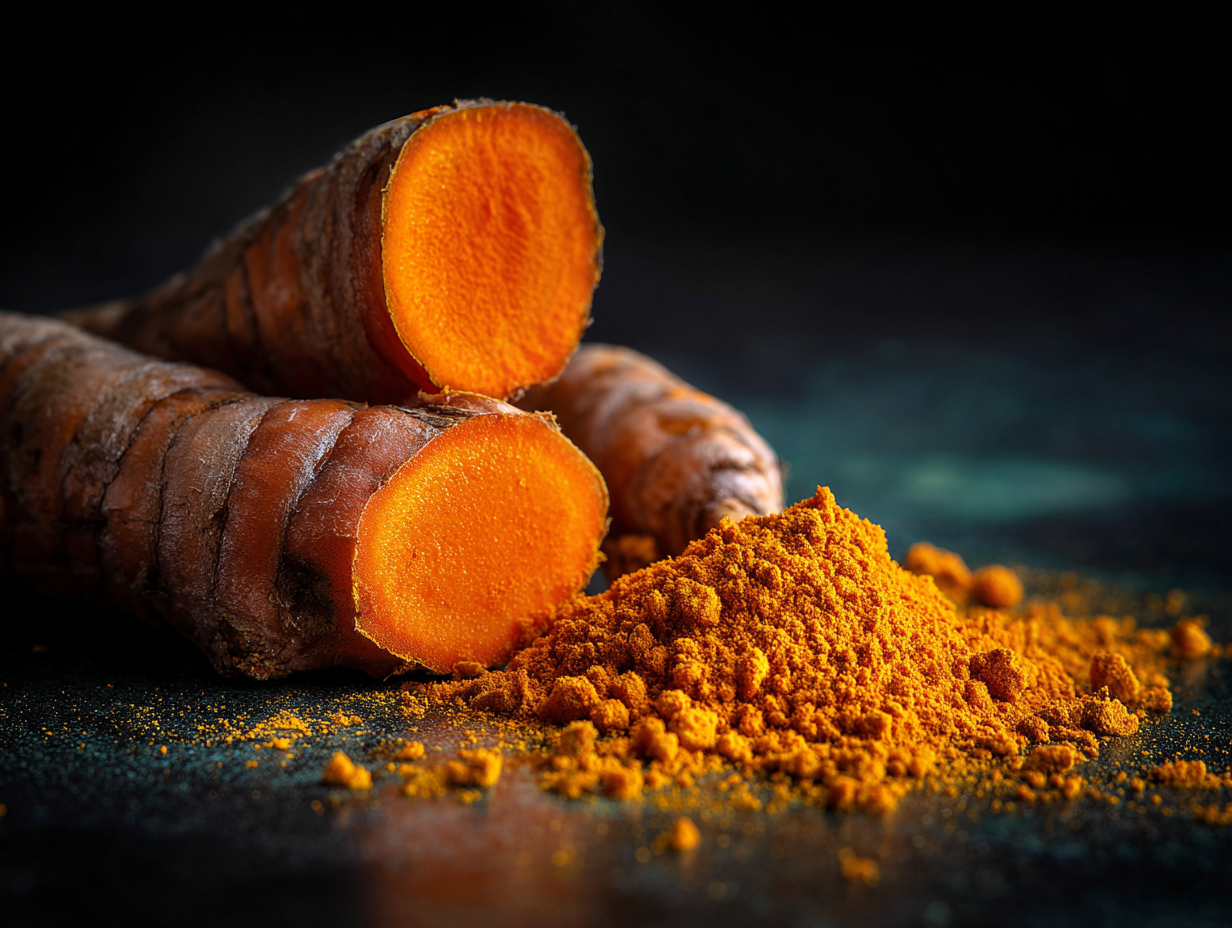
Turmeric (Curcuma longa) is a herbaceous plant in the same family as ginger. Native to South Asia, it has been cultivated for millennia for culinary and medicinal uses. Its orange rhizome, ground into powder, is the source of the well-known spice. Behind this intense colour lie the curcuminoids (including curcumin), considered the main drivers of its biological properties.
Although turmeric has long been used in traditional medicines to "soothe inflammation," curcumin was first isolated in the 19th century, paving the way for more advanced scientific research. Over the past twenty years, interest in its potential role in chronic diseases linked to inflammation and oxidative stress, including osteoarthritis, has grown considerably.
How are turmeric extracts obtained?
The simplest form of turmeric used in dietary supplements is dried rhizome powder. It naturally contains a complex mixture of active compounds called curcuminoids, including curcumin.
These curcuminoids represent only a small fraction (about 3 to 5%) of the total powder. To obtain a higher, consistent concentration, manufacturers extract the raw powder to isolate and concentrate the molecules of interest.
There are two main categories of extracts:
- Standardised extracts (often at 95% curcuminoids), obtained using food-grade solvents or modern techniques such as pressure extraction.
- Enhanced forms (micelles, nano-emulsions, phospholipid complexes), designed to protect the molecule and facilitate its absorption by the body.
This extraction process is essential: curcumin is naturally poorly soluble in water, unstable and rapidly metabolised. In other words, when taken as simple turmeric powder, only a small portion actually reaches the bloodstream, which explains the interest in optimised extracts.
Why use it in supplements for dogs?
Turmeric targets key mechanisms of osteoarthritis:
- inflammation (via modulation of molecules such as NF-κB, TNF-α, IL-1β),
- oxidative stress (neutralization of free radicals, protection of cell membranes),
- and potentially cartilage degradation.
It is this combination that has led turmeric to be tested in many experimental osteoarthritis models, with generally positive results.
Today, turmeric is found in several ranges of joint supplements for dogs, either alone or combined with other active ingredients, such as green-lipped mussel and Omega-3. Its potential is interesting, but as we will see later, everything depends on the form used and the quality of the extract.
How does turmeric work on the joints?
Osteoarthritis is not simply "mechanical wear": it is a chronic inflammatory and oxidative process that progressively damages cartilage, subchondral bone, and the synovial membrane. In this context, turmeric curcuminoids have attracted researchers' attention because they target several of these key mechanisms.
A natural anti-inflammatory
Curcumin acts as a brake on certain pro-inflammatory molecules. It inhibits central signalling pathways, notably NF-κB, which reduces the production of cytokines involved in pain and joint degradation, including TNF-α, IL-1β and IL-6.
In practice, this could result in less inflammation in the joint, and therefore a reduction in pain and stiffness.
A powerful antioxydant
Oxidative stress contributes to osteoarthritis by damaging cartilage cells and sustaining inflammation. Curcumin has a strong antioxidant capacity: it directly neutralises free radicals and stimulates endogenous defence systems, including glutathione and antioxidant enzymes.
A potential role on cartilage
Some preclinical data suggest that curcumin could limit the activity of enzymes that destroy the cartilaginous matrix (such as MMPs) and promote a balance more favourable to cartilage protection.
This is not about "rebuilding" damaged cartilage, which remains very limited in osteoarthritis, but rather about slowing degradation and improving joint function.
In summary: turmeric acts simultaneously as an inflammation modulator, an antioxidant, and a cartilage protector. These three mechanisms make it an interesting candidate for supporting arthritic dogs.
What do studies say about turmeric and osteoarthritis?
While the mechanisms of action of turmeric are now well described in the laboratory, the real question remains: what about in practice, in arthritic dogs?
In dogs: still few targeted trials
To date, available data in dogs are limited. We do not yet have large randomised studies testing turmeric alone for osteoarthritis. Nevertheless, some research provides encouraging findings:
- In a 180-day trial, dogs supplemented with 250 mg/day of curcuminoids showed an improvement in antioxidant status (increase in GSH/GSSG ratio), with no alteration of liver or kidney panels. In other words, turmeric appears well tolerated over the long term and capable of modulating oxidative stress, a key factor in osteoarthritis.
- Other recent veterinary studies explore combined formulas (turmeric + green-lipped mussel, turmeric + boswellia). They report improvements in mobility and joint comfort, but it remains difficult to attribute the effect to turmeric alone in these mixtures.
In humans: more advanced data
Human osteoarthritis has been the subject of numerous studies with turmeric. Several clinical trials and reviews conclude that curcumin can:
- reduce pain and joint stiffness,
- improve function measured by validated questionnaires,
- with efficacy sometimes comparable to non-steroidal anti-inflammatory drugs (NSAIDs), but with fewer digestive side effects.
These results, although focused on humans, reinforce interest in turmeric as a supplement for dogs, even if clinical studies remain essential to confirm these benefits in dogs.
Bioavailability: why not all forms of turmeric are equal
The main challenge with turmeric is that it is naturally very poorly absorbed by the body. Curcumin is poorly soluble in water, rapidly degraded, and eliminated by the liver. As a result, when simply giving raw rhizome powder, only a tiny fraction reaches the bloodstream and therefore the joints.
To overcome this limitation, manufacturers have developed optimized forms capable of increasing bioavailability.
Taking turmeric with a fatty meal
Curcumin is a fat-soluble molecule, so it is absorbed more effectively in the presence of fats. Giving the supplement at mealtime rather than on an empty stomach therefore improves its absorption.
Some products also combine turmeric with piperine, a black pepper extract that blocks a liver enzyme and can increase absorption. Nevertheless, this approach should be used with caution in veterinary medicine, as it can also interfere with other medications.
New "high-absorption" forms
Several technologies have been developed in recent years to increase the availability of curcumin in the body:
- Liquid micelles: tiny "capsules" that trap curcumin in a soluble structure.
- Nano-emulsions: ultra-fine dispersions that allow homogeneous diffusion in the digestive tract.
- Liposomes and phospholipid complexes: curcumin is combined with lipids that facilitate its passage through cell membranes.
- Solid nanoparticles: stable forms that slow degradation and prolong circulation in the blood.
These approaches are not mere technical details: they determine the amount actually available and therefore clinical efficacy.
Tolerance and precautions for use in dogs
Turmeric has an overall reputation for safety. Long used in human food and herbal medicine, it is recognised as safe and well tolerated by the US authorities (GRAS, Generally Recognized As Safe).
In veterinary medicine, the first available data do not report any concerning signals, but caution is still warranted: evidence in dogs remains insufficient.
Still limited data in dogs
Very few controlled clinical studies have evaluated turmeric alone in arthritic dogs. Tolerance relies mainly on:
- experimental models (rats, mice, rabbits) that confirm a good safety profile,
- a few exploratory studies in dogs (for example, 180-day supplementation in diabetic dogs), where no notable side effects or biological abnormalities were reported.
These data are encouraging, but they are not sufficient to establish complete safety, especially in the context of osteoarthritis, which often affects older dogs taking medication.
Points of caution
Even if available signals are reassuring, a few precautions deserve emphasis:
- Limited clinical evidence: in the absence of robust randomised trials, the efficacy and tolerance of turmeric in arthritic dogs remain poorly documented.
- Potential interactions: formulas enriched with piperine increase curcumin absorption, but can also alter the metabolism of other medications.
- Special situations: caution in dogs with hepatobiliary disorders, coagulation disorders, or being monitored for chronic conditions.
- Uncertain dosage: doses in commercial supplements are sometimes far from those tested in the laboratory, making the actual effect difficult to anticipate, both in terms of efficacy and safety.
In summary
Turmeric appears rather well tolerated, but clinical data specific to arthritic dogs are still too scarce to conclude with certainty. In practice, it is advisable to:
- favour quality formulations, ideally standardised and optimised for bioavailability,
- follow the doses recommended by the manufacturer,
- and seek veterinary advice, especially if the dog is older, frail, or on medication.
What alternatives are better documented than turmeric?
Turmeric is a promising active ingredient, but we must remain realistic: robust clinical evidence in dogs with arthritis is still lacking. Conversely, some nutraceutical families benefit from much stronger scientific documentation in veterinary medicine.
Omega-3 EPA/DHA
Long-chain Omega-3 fatty acids (EPA and DHA) are among the most extensively studied active ingredients for canine osteoarthritis. Several controlled trials have shown their ability to reduce joint inflammation, improve mobility and decrease pain observed by owners. These results have been confirmed by independent meta-analyses.
Discover our guide to Omega-3
New Zealand green lipped mussel oil
Green-lipped mussel (Perna canaliculus) is a natural source of Omega-3, but not only that: it also contains powerful antioxidants (carotenoids, furan fatty acids) that give it a synergistic action. Several veterinary clinical studies have shown a significant improvement in mobility and quality of life in arthritic dogs after supplementation.
A multimodal approach remains key
Whether considering turmeric or other active ingredients, no supplement is a miracle solution on its own. Canine joint support relies on a comprehensive strategy:
- weight management,
- gentle physical activity,
- veterinary follow-up,
- and the use of dietary supplements with documented efficacy.
In summary, turmeric is an interesting candidate, but current data do not yet place it on the same level as Omega-3 and green-lipped mussel, whose efficacy is supported by numerous veterinary studies.
FAQ
Conclusion
Used for centuries in Ayurvedic and Chinese medicine, turmeric is now the subject of in-depth studies exploring its potential for joint health. Its anti-inflammatory and antioxidant properties make it a serious candidate for supporting dogs with osteoarthritis. Laboratory and human studies are encouraging, and the first veterinary data have not identified any major tolerance concerns.
However clinical evidence in arthritic dogs is still too limited to make it a first-line solution. Today, the best-documented active ingredients remain Omega-3 (EPA/DHA) and New Zealand green-lipped mussel oil, whose efficacy for pain and mobility is supported by several independent veterinary trials.
It is on this solid scientific basis that PERNIXOL® was developed. This liquid supplement from Laboratoire Sensilia is formulated with concentrated green-lipped mussel oil rich in Omega-3 and microalgae oil rich in DHA. Thanks to its highly bioavailable liquid form, PERNIXOL® offers optimised joint support backed by veterinary literature.
Discover PERNIXOL®, rich in green lipped mussel oil
Scientific references
- Daily JW, Yang M, Park S. Efficacy of Turmeric Extracts and Curcumin for Alleviating the Symptoms of Joint Arthritis: A Systematic Review and Meta-Analysis of Randomized Clinical Trials. J Med Food. 2016 Aug;19(8):717-29. doi: 10.1089/jmf.2016.3705. PMID: 27533649; PMCID: PMC5003001.
- Suemanotham N, Photcharatinnakorn P, Chantong B, Buranasinsup S, Phochantachinda S, Sakcamduang W, Reamtong O, Thiangtrongjit T, Chatchaisak D. Curcuminoid supplementation in canine diabetic mellitus and its complications using proteomic analysis. Front Vet Sci. 2022 Dec 23;9:1057972. doi: 10.3389/fvets.2022.1057972. PMID: 36619946; PMCID: PMC9816143.
This article was written by the R&D team at Sensilia Laboratory, experts in animal nutrition.



