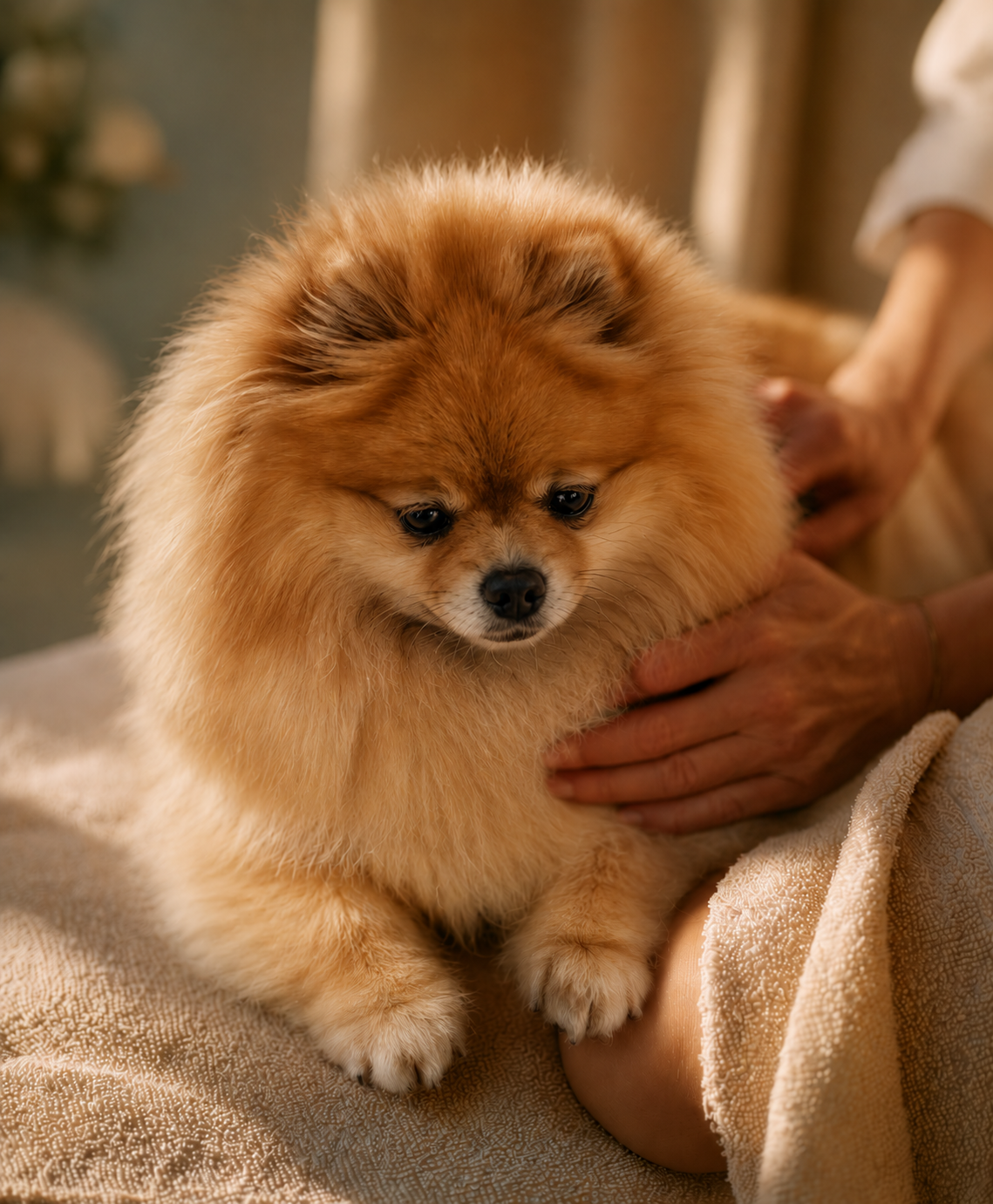
Osteopathy and PERNIXOL® case study
Discover how animal osteopathy and PERNIXOL® helped Noisette, a 9-year-old Pomeranian, regain mobility, comfort and quality of life.
Pauline Durepaire
Published in
PERNIXOL® DailyJoint pain and muscular compensations are common in dogs, particularly after orthopaedic surgery or with advancing age. Intermittent lameness, difficulty getting up, loss of mobility or chronic discomfort can progressively impair the animal's quality of life.
In this context, an increasing number of professionals favour a holistic approach combining:
- osteopathic follow-up,
- movement support,
- and natural daily joint support.
This is precisely the approach advocated by Julie Pujol, an animal osteopath who regularly supports dogs with mobility problems, post-operative compensatory patterns and chronic joint conditions.
Through this concrete case, she shares the follow-up of Noisette, a 9-year-old Pomeranian who underwent knee surgery, and explains how integrating PERNIXOL® into her support plan contributed to a lasting improvement in her comfort and mobility.
Who is Julie Pujol, animal osteopath?
Julie Pujol is an animal osteopath based in Bordeaux, France, specialising in mobility and functional balance in animals.
She supports dogs, horses and other animals on a daily basis through a gentle, holistic approach centred on lasting well-being.
Her work is based on a holistic view of the body: when a joint is affected or surgery alters weight-bearing, posture and entire muscle chains can be affected. Animal osteopathy aims to help the body regain better functional balance and greater comfort in movement.
Find out more about Julie Pujol, animal osteopath
Why choose osteopathy to relieve joint disorders?
After surgery, as dogs age or with certain chronic conditions such as dysplasia or osteoarthritis, the body often develops compensatory patterns.
Even when the initial cause is treated, these compensations can persist:
- muscular tension,
- overload on certain joints,
- locomotor fatigue,
- chronic inflammation,
- progressive loss of mobility.
Osteopathy can therefore help to:
- release tension,
- improve overall mobility,
- support recovery phases,
- limit certain compensations.
But between sessions, daily life remains essential. This is where natural joint support such as PERNIXOL® can play a complementary role.
What is PERNIXOL®?
PERNIXOL® is a natural liquid supplement for canine joint comfort, rich in green-lipped mussel oil and fermented microalgae oil, two highly concentrated sources of marine omega-3s (EPA, DHA and ETA) and rare antioxidants.


Used in dogs prone to stiffness, joint pain or locomotor discomfort, PERNIXOL® provides daily support for:
- senior dogs,
- sporting dogs,
- dogs in post-operative recovery,
- or those suffering from chronic joint pathologies such as osteoarthritis or dysplasia.
It is designed to promote mobility, protect the joints and support a dog's quality of life over the long term.
Thanks to its natural formulation and good palatability, PERNIXOL® fits easily into the daily routine and can be used alongside holistic care including animal osteopathy, physiotherapy or veterinary follow-up.
As part of this complementary approach, Julie Pujol, an animal osteopath, chose to integrate PERNIXOL® into Noisette's follow-up.
Case study: Noisette's follow-up
Noisette is a 9-year-old Pomeranian living in a house with outdoor access, together with her retired owner. She enjoys regular walks but does not take part in any particular sporting activity.
Julie Pujol supported her during post-operative recovery following surgery on her right kneecap after a cruciate ligament rupture requiring an osteotomy with plate fixation in the right knee.
An osteotomy is a surgical procedure involving modifying or realigning a bone in order to stabilise the joint and improve weight-bearing. This technique is frequently used in dogs suffering from cruciate ligament rupture to restore better knee stability.
Despite the surgical intervention, several signs of discomfort persisted:
- intermittent forelimb lameness,
- occasional difficulty getting up,
- overall locomotor discomfort,
- daily joint fatigue.
Osteopathic care
In dogs who have undergone orthopaedic surgery, compensations can persist long after visible recovery. Even when the operated joint appears stabilised, the body often continues to protect certain painful areas by altering weight-bearing, posture and muscular tension.
This is precisely what Julie observed in Noisette during her osteopathic assessment.
A body in compensation after surgery
Following surgery on her right knee and the subsequent recovery period, Noisette shifted much of her weight onto her forelimbs and her left hind leg, considered the 'healthy' back leg.
This imbalance had led to several significant compensations:
- tension in the shoulders,
- restricted mobility in the front of the body,
- muscular contractures in the pectorals,
- tension at the sternum,
- effects extending to the head and neck through the cervical muscles,
- misaligned pelvis,
- persistent tension around the operated knee,
- discomfort in the mid-back, a major compensatory zone in the dog.
The objectives of osteopathic follow-up
The main objective of Julie's follow-up was to improve Noisette's daily comfort over the long term while limiting the effects of chronic compensatory patterns.
The osteopathic work aimed in particular to:
- rebalance the body overall,
- release tension in compensatory zones,
- preserve mobility,
- limit locomotor discomfort,
- and support the dog over the long term after this joint surgery.
Annual follow-up, or twice-yearly follow-up if discomfort recurred, was recommended to monitor and respond to changes over time.
Indicators observed throughout follow-up
To assess Noisette's progress, several elements were monitored daily and during sessions:
- muscular contractures,
- compensatory zones,
- episodes of lameness,
- stiffness,
- signs of discomfort,
- as well as the owner's observations on her dog's mobility and behaviour in daily life.
Introduction of PERNIXOL® into osteopathic care
For chronic or post-operative joint conditions, the aim is not limited to providing occasional relief after an osteopathy session. The real challenge is to improve everyday mobility and comfort over the long term.
As part of this holistic approach, Julie Pujol chose to integrate PERNIXOL® into Noisette's follow-up.
An approach consistent with animal osteopathy
Accustomed to supporting dogs suffering from joint pain, postural compensations or chronic locomotor disorders, Julie Pujol has long been interested in natural solutions to support joints on a daily basis.
As she explains:
I have always recommended New Zealand green lipped mussel, rich in Omega 3, as a dietary supplement to relieve and preserve dogs' joints.
The osteopath also emphasises the importance of a natural, minimally processed approach, in line with the philosophy of animal osteopathy:
PERNIXOL® is a natural dietary supplement, appreciated by animals and minimally processed, in line with the ethics of alternative medicines advocating natural care such as osteopathy.
Despite osteopathy sessions, Noisette still showed signs of joint fatigue in her daily life:
- locomotor discomfort,
- intermittent lameness,
- persistent pain between sessions.
The objective was therefore to support Noisette every day, not only during osteopathic sessions.
Why integrate PERNIXOL®?
The supplement was introduced shortly after the first session, following feedback from the owner who noted persistent joint discomfort despite the improvement observed after osteopathy.
Julie Pujol explains:
Integrating a dietary supplement such as PERNIXOL® on a daily basis helped improve Noisette's mobility and daily comfort, not only in the weeks following osteopathy sessions.
Implementation was simple:
- one 1 ml dose each day,
- directly in the food,
- easy to administer, according to the owner.
Results observed after several weeks
A few weeks after Noisette started taking PERNIXOL®, Julie observed a clear improvement in mobility in Noisette as well as a gradual disappearance of lameness.
But the most striking change remains the stability of results over time.
The lameness that returned between each osteopathy session has completely disappeared for approximately two years now.
Even today, certain bodily compensations remain visible during osteopathic sessions, a frequent phenomenon after joint surgery, but without significant pain in daily life.
The osteopath also observes:
- a more stable body,
- less inflammation-related tension,
- and no signs of early osteoarthritis in the operated or compensating joints.
Testimonial from Noisette's owner
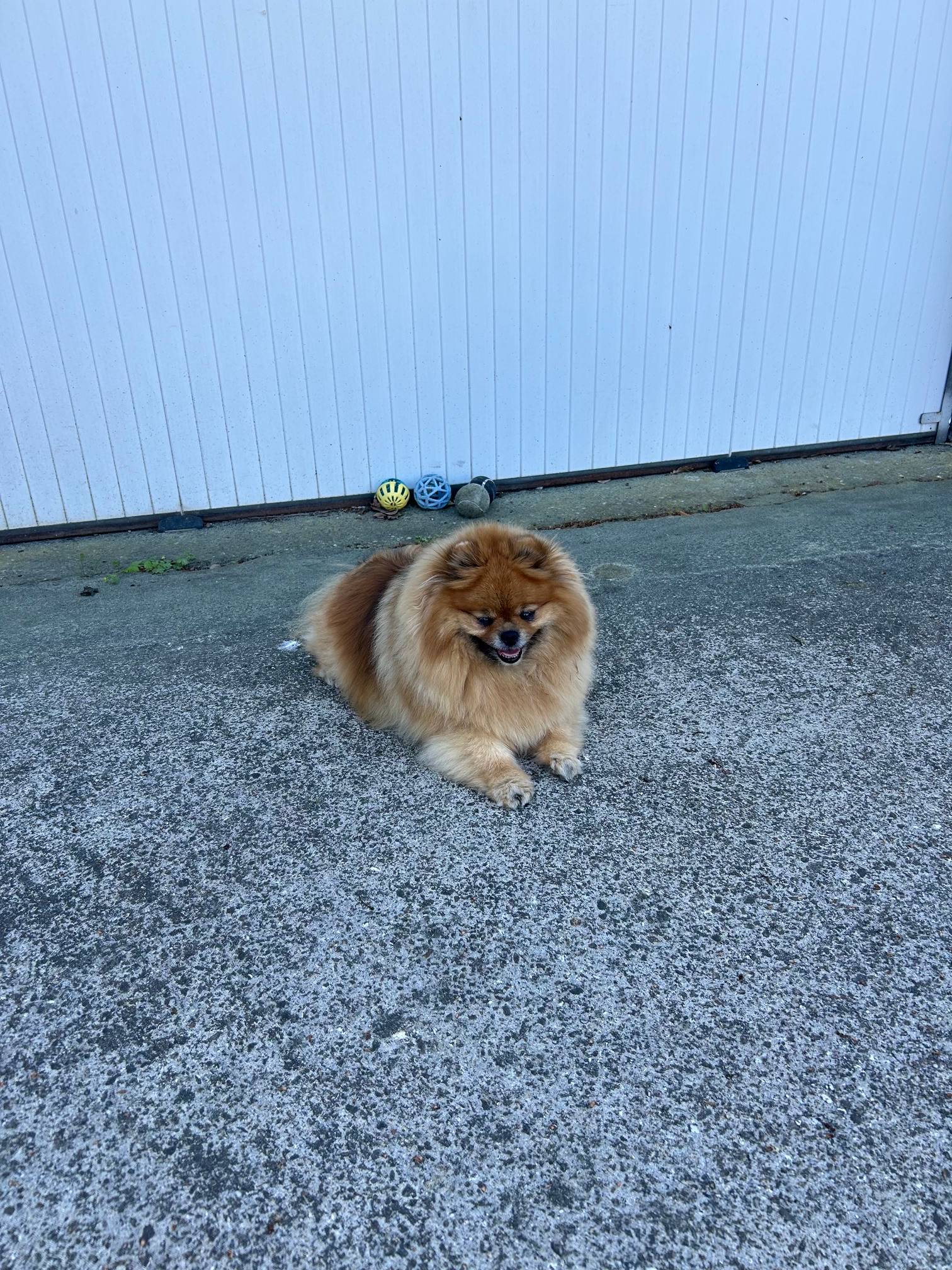
Beyond the observations made during osteopathic follow-up, the changes were also visible in Noisette's daily life, as her owner reported:
Noisette had surgery in 2023 for cruciate ligaments and kneecap luxation. After recovering from the operation, she could not climb a small step and often could not get up. Her back leg remained stuck. I started giving her PERNIXOL® and I realised she was climbing the step without any problem and was no longer getting stuck. I give her a dose of 1ml each day because I think it is thanks to this that she is doing much better.
Julie Pujol, animal osteopath's perspective on PERNIXOL®
Based on her professional experience, Julie now considers PERNIXOL® a genuine support in managing canine joint comfort.
PERNIXOL® is a real ally for the osteopath in managing the dog's well-being and comfort.
During sessions, she regularly notices differences in dogs receiving supplementation:
Dogs taking PERNIXOL® as a supplement have bodies that are far less tense and painful.
According to her, this type of support can be particularly relevant for:
- senior dogs,
- dogs suffering from osteoarthritis,
- dysplasia,
- spondylarthrosis,
- or dogs in recovery after injury or surgery.
With PERNIXOL®, the dogs I support are relieved on a daily basis, steadier on their feet, more mobile and dynamic, age better and suffer far less from inflammatory joint flare-ups.
Noisette's follow-up shows that a holistic approach combining animal osteopathy and natural joint support can genuinely improve the dog's daily comfort over the long term.
Thanks to the work of Julie Pujol, animal osteopath, and the integration of PERNIXOL®, Noisette gradually regained better mobility, with the disappearance of lameness between sessions and greater daily comfort.
Key takeaways
- Compensations after surgery can last several years.
- Osteopathy helps rebalance the body and limit tension.
- PERNIXOL® supports daily joint comfort.
- This approach is particularly relevant for senior dogs, those with osteoarthritis or in post-operative recovery.
FAQ
Conclusion
Noisette's follow-up illustrates the value of a holistic approach combining animal osteopathy with natural daily joint support. After orthopaedic surgery, compensatory patterns can persist for a long time and have a lasting impact on a dog's mobility and comfort.
Thanks to the work of Julie Pujol and the integration of PERNIXOL®, Noisette gradually regained better locomotor comfort, with the disappearance of lameness between sessions and a lasting improvement in her quality of life.
This concrete case shows that regular, long-term support can make a real difference for senior dogs, those with osteoarthritis or in post-operative recovery.
This article was co-written with Julie Pujol, an animal osteopath, as a clinical case report on canine joint support with PERNIXOL®.



